Why Portion Sizes Are the Silent Factor in Your Fitness Journey
13 October 2026
Most people who struggle to change their bodies focus on two things: what they eat and how much they exercise. They swap white rice for brown, join a gym, download a training plan, and track their workouts with impressive discipline. Then weeks pass and the mirror barely moves. The frustration that follows is real, and it usually leads to one of two conclusions. Either the diet is wrong, or the training is wrong. In my experience working with people on their health and performance, the answer is often neither. The problem lives in a quieter place. It sits on the plate in front of them, in amounts they never really measured.
Portion size is the silent factor because it operates without announcement. You can eat all the "right" foods and still overload your system with more energy than it needs. You can train hard five days a week and quietly undo much of that work with a few hundred extra calories a day. There is no alarm that goes off. There is no obvious villain. Just a slight overshoot, repeated daily, that compounds into a result you did not want.
This article is about understanding that mechanism, why it is so easy to miss, and how to work with it in a way that fits real life.
Why Portion Size Gets Ignored
Portion size is boring compared to macros, meal timing, and training splits. It does not have a brand. It does not come with a community or a hashtag. It is also uncomfortable to examine because it forces you to confront how much you are actually eating, and most people overestimate their awareness of this.There is a deeper reason too. Food quality advice is easier to follow than quantity advice. Choosing chicken over fried chicken feels like a decision you can make once. Deciding how much chicken is a decision you make every single meal, forever. That repetition is exhausting, and the brain resists it.
On top of that, many popular approaches quietly assume that if you eat the right foods, quantity will take care of itself. That assumption works for some people and fails badly for others. Appetite is not a reliable guide for everyone. Hormones, sleep, stress, food reward, and years of eating patterns all shape how much you want to eat, and none of them care about your fitness goals.
The Energy Balance Reality Nobody Escapes
Every meaningful change in body composition runs through energy balance. You store fat when you consistently take in more energy than you expend. You lose it when the reverse is true. This is not a diet philosophy. It is a description of how the body handles fuel.What makes portion size so powerful is that it is the most direct lever on energy intake. You can change your macro split, your meal frequency, and your food choices without changing total intake at all. Portion size is the variable that actually moves the number.
Here is the part people underestimate. Small daily differences produce large long-term results. A surplus of just 150 calories a day, which is roughly a small handful of nuts or an extra slice of bread with butter, adds up to more than 50,000 calories over a year. That is the energy equivalent of many kilograms of body mass. Nothing about that extra handful felt significant in the moment. That is exactly why it is silent.
The reverse is also true, and this is the encouraging side. Trimming portions slightly, in a way that does not feel like deprivation, can produce steady progress without a dramatic overhaul. You do not need a perfect diet. You need a daily intake that matches your goal.
Why "Healthy" Food Does Not Protect You
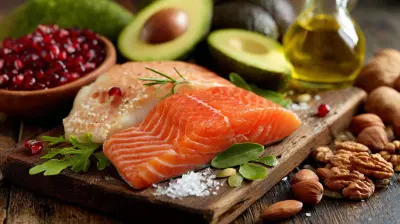
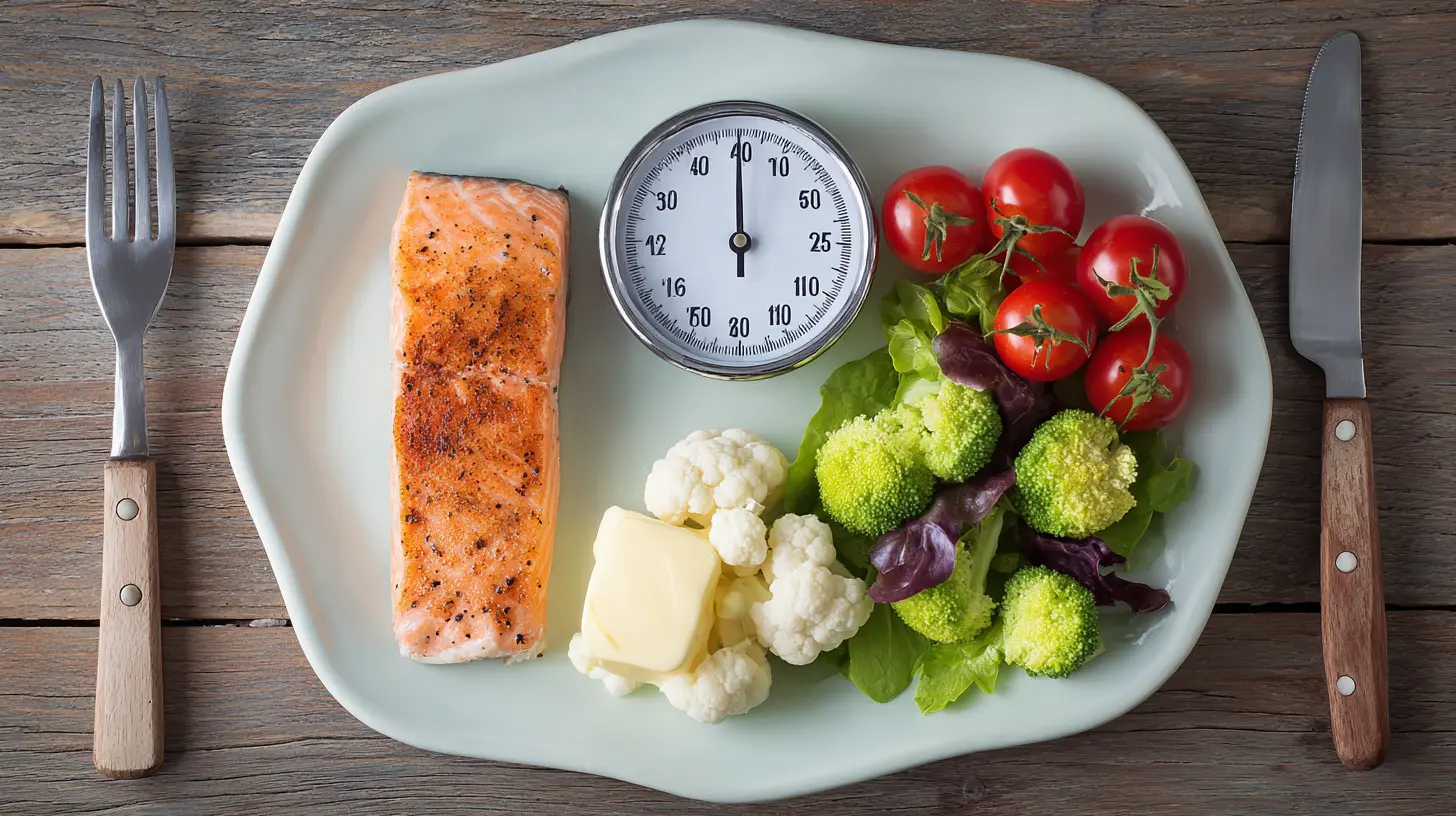
One of the most common misconceptions is that food quality and food quantity are the same conversation. They are not.Olive oil, nuts, nut butters, avocado, cheese, dark chocolate, granola, and full fat yogurt are all nutrient dense and perfectly reasonable foods. They are also calorie dense. A portion of almonds that fits in a closed fist can carry 300 to 400 calories. A generous pour of olive oil over a salad can add 200 calories before you have noticed it happened. None of this is a reason to avoid these foods. It is a reason to measure them.
The same logic applies to restaurant and takeaway food, where portions have grown substantially over the past few decades. When you eat out, you are not just eating different food. You are usually eating more of it. A single restaurant pasta dish can contain two or three times the amount you would serve yourself at home, along with far more oil and butter than you would use in your own kitchen.
Even home cooking is not immune. Recipes are often written for four people, but the actual yield depends on how hungry everyone is and how generous the serving spoon is. "One serving" is a flexible concept in most households.
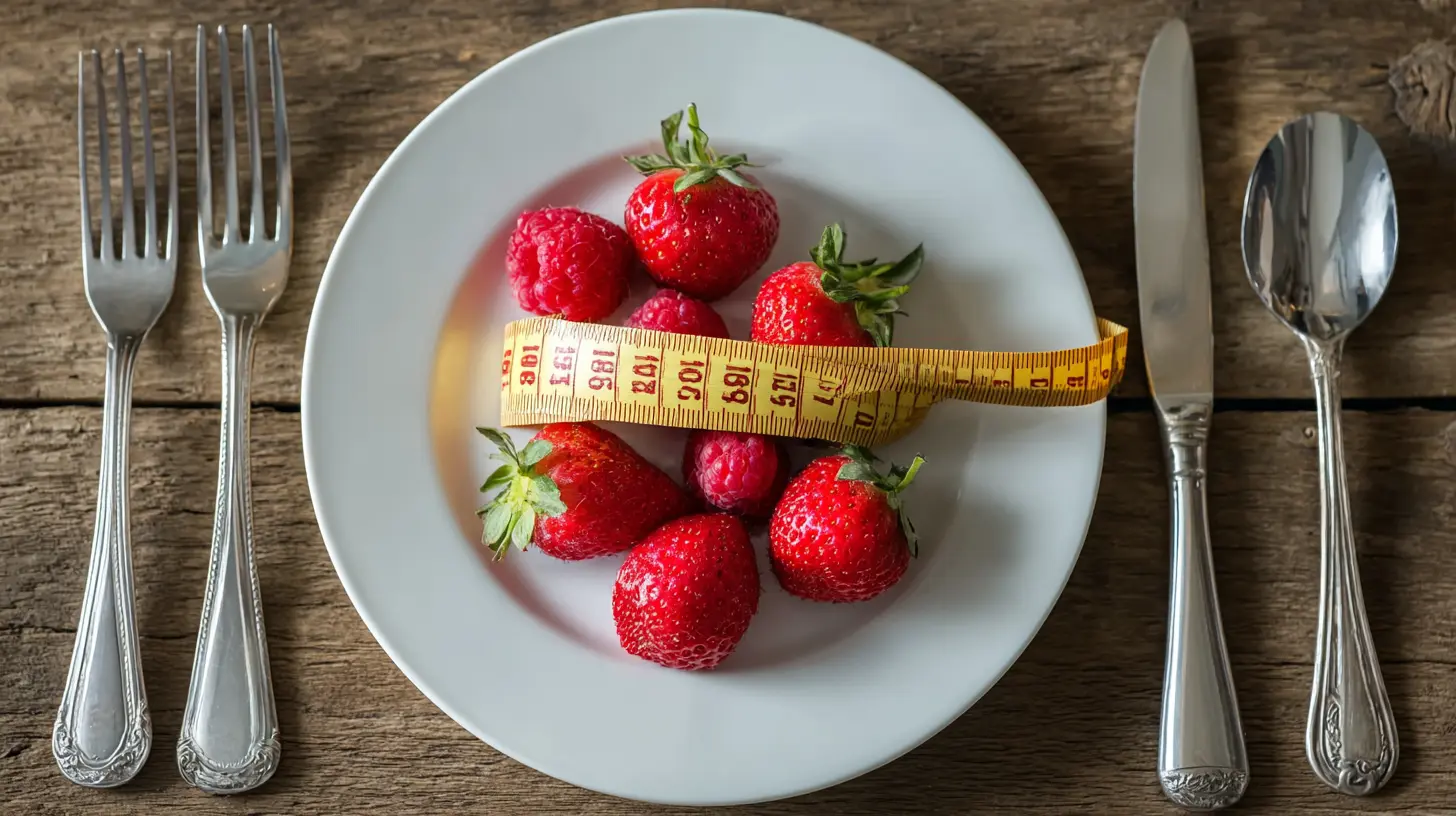
The Psychology of the Plate
Portion size is not only a nutrition issue. It is a perception issue.Research in eating behavior has repeatedly shown that people eat more when they are given more, and they do not feel correspondingly fuller. Larger plates, larger bowls, larger packages, and larger scoops all nudge intake upward without a matching increase in satisfaction. Your sense of "enough" is influenced by visual cues more than most people realize. A normal portion on a large plate looks small, so you add more. The same portion on a smaller plate looks complete, so you stop.
This matters because it means portion control is not purely about willpower. It is about designing your environment so that the natural, effortless choice is also the appropriate one. That is a far more sustainable strategy than relying on restraint at every meal.
There is also the clean plate habit, which many people carry from childhood. Finishing what is in front of you is a good value in some contexts and a poor guide in others. If the portion was too large to begin with, cleaning the plate simply means consistently overeating.
Portion Size Versus Serving Size Versus Portion Control
These terms get used interchangeably, and the confusion causes real problems.A serving size is a standardized reference amount used on food labels and in dietary guidelines. It is not a recommendation for you personally. It is a unit of measurement, like a gram or a cup.
A portion size is how much you actually eat in one sitting. It can be larger or smaller than a serving size, and it varies by person, meal, and day.
Portion control is the practice of deciding your portion deliberately rather than by habit or circumstance.
Understanding the difference matters because people often feel they are "following the label" when they eat three servings of something without realizing it. A bag of crisps might list a 30 gram serving. If you eat the whole 150 gram bag, you have eaten five servings, not one. The label was accurate. The portion was not.
How to Find Your Actual Portions Without Losing Your Mind
The idea of weighing every gram of food for the rest of your life is miserable for most people, and it is not necessary. But some short term measurement is almost always worth it, because estimation is far less accurate than people believe.Here is a practical sequence I recommend.
Step 1: Measure for one to two weeks
Weigh or measure the foods you eat most often. Rice, pasta, oats, oils, nuts, meats, cheeses, and any calorie dense item. Do not change anything yet. Just observe. Most people are genuinely surprised by what they find, and that surprise is the point. You cannot adjust what you have never seen.Step 2: Build visual anchors
Once you know what 40 grams of oats or 150 grams of cooked rice looks like in your usual bowl, you no longer need the scale for that food. You have a reference image in your head. This is how experienced eaters operate. They are not guessing. They are recognizing.Step 3: Use hand portions for flexibility
Hand based methods are a reasonable middle ground when you are away from your kitchen. A palm of protein, a cupped hand of carbohydrates, a thumb of fats, and a fist of vegetables is a rough but workable template for many adults. It is not precise, and it does not account for individual calorie needs, but it is far better than nothing and far more sustainable than constant weighing for some people.Step 4: Recalibrate when your body changes
Your portions that worked at 90 kilograms will not necessarily work at 75 kilograms. As you lose mass, your energy expenditure drops. As you gain muscle, it rises. Portions are not a permanent setting. They are a moving target that needs occasional review.The Trade-Offs of Different Approaches
There is no single correct way to manage portions. Each method has real advantages and real costs.Weighing food is the most accurate. It removes guesswork and gives you data you can act on. The downside is that it is time consuming, socially awkward in some settings, and can become obsessive for people with a history of disordered eating. It works best as a short term learning tool or for people who genuinely enjoy precision.
Tracking calories in an app offers similar accuracy with more context about macronutrients. It also carries the same risks and the same time cost. It is powerful for people who like data and can be a trap for people who become anxious around numbers.
Hand portions are fast, portable, and easy to teach. They are less precise, which matters more for smaller people and for calorie dense foods. They work well as a default for maintenance and as a fallback when tracking is not practical.
Pre-portioned meals and containers reduce decision fatigue dramatically. You prepare food in advance in set amounts, and the portion is decided before hunger is involved. The cost is upfront time and less spontaneity.
Mindful eating, which means slowing down and tuning into hunger and fullness cues, is the most sustainable long term skill for many people. It is also the hardest to learn, and it works poorly when the food environment is stacked against you or when you are eating highly palatable, calorie dense meals.
Most successful people I have worked with use a combination. They measure and track for a period to build awareness, then shift to hand portions and pre-portioned meals for daily life, and lean on mindful eating when they are out with friends or on holiday.
Common Mistakes That Keep People Stuck
Only controlling portions at dinner. Breakfast, snacks, and drinks all count. Liquid calories in particular slip past fullness signals almost entirely. A large flavored coffee drink or a couple of alcoholic drinks can carry the same energy as a full meal.Measuring the base and ignoring the extras. You weigh your chicken and rice, then add sauce, oil, cheese, and a "small" dessert without measuring any of it. The extras are often where the surplus hides.
Eating back exercise calories. Fitness trackers and gym machines overestimate energy burned, sometimes substantially. Eating back the full estimated burn often erases the deficit you worked to create.
Assuming small bodies need the same portions as large ones. A 60 kilogram person and a 95 kilogram person doing the same workout have very different energy needs. Copying someone else's plate is not a strategy.
Cutting portions too aggressively. Large deficits are hard to sustain, they increase hunger, they can reduce training quality, and they often lead to rebound overeating. A moderate, consistent reduction is almost always more effective than a dramatic one.
Never adjusting. The portions that produced fat loss at the start of a diet often stop working after a few months, because your body has changed and your expenditure has dropped. This is normal. It is not a sign that your metabolism is broken.
Practical Strategies That Actually Hold Up
Use smaller plates and bowls. This sounds trivial. It is not. It changes the visual reference for what "enough" looks like, and it works without conscious effort.Serve from the counter, not the table. Leaving serving dishes within arm's reach makes second helpings automatic. Putting them away adds a small friction that gives you a moment to decide whether you actually want more.
Pre-portion snacks into bowls. Eating directly from a large bag is one of the easiest ways to consume far more than intended. Pour a portion into a bowl and put the bag away.
Build meals around volume, then add calorie density. Vegetables, lean proteins, and high water content foods fill the plate and the stomach for relatively few calories. Then add oils, nuts, cheeses, and starches in measured amounts for satisfaction. This combination gives you a full plate and a controlled total.
Eat protein and fiber first. Both support fullness, which makes it easier to stop at an appropriate portion rather than pushing past it.
Plan for the meals that matter most. If you know you have a large dinner out, adjust the earlier meals slightly rather than trying to compensate afterward. Preemptive balance is easier than damage control.
Check in halfway through the meal. A simple pause, a sip of water, and a quick question about whether you are still enjoying the food and still hungry can save you from finishing on autopilot.
When Portion Control Is Not the Answer
There are situations where focusing on portions is the wrong move, and it is worth being honest about them.If you are underweight, recovering from an eating disorder, or struggling with low energy availability, aggressive portion control is harmful. In these cases, the goal is often to increase intake, not reduce it, and professional support matters more than any general advice.
If you are training at a high volume and feeling constantly fatigued, your problem may be under eating rather than over eating. More food, not less, is often the fix.
If you have a medical condition that affects appetite, digestion, or metabolism, individual guidance from a qualified clinician is more appropriate than a general article.
And if you find that measuring food is triggering anxiety or obsessive thoughts, step back. Precision is a tool, not a requirement. Health should not cost you your relationship with food.
The Long Game
Portion size is unglamorous. It does not have a dramatic before and after story. It does not inspire anyone at the gym. But it is one of the few variables that quietly determines whether all your other efforts pay off.The people who succeed over years, not weeks, tend to be the ones who develop a genuine feel for appropriate amounts. They know what a portion of rice looks like in their bowl. They know that a handful of nuts is smaller than their hand suggests. They adjust when their body changes. They do not need to be perfect, because they are consistent.
If you have been doing everything "right" and not seeing the result you expected, take an honest look at the plate. Not with judgment, just with curiosity. Measure for a couple of weeks. Notice what surprises you. Then make one or two small adjustments and hold them long enough to see what happens.
The silent factor is not silent because it is hidden. It is silent because we stopped listening to it.
all images in this post were generated using AI tools
Category:
Portion ControlAuthor:

Sophia Wyatt