The Best Bodyweight Workouts to Incorporate into Any Plan
10 October 2026
Bodyweight training has a reputation problem. It gets filed under "beginner" or "backup option for when the gym is closed," as if moving your own mass against gravity were somehow a lesser form of resistance training. That framing misses something important. Your body is the one load you will always have access to, and the way you manipulate leverage, tempo, and range of motion determines whether a push-up is a warm-up or a serious strength stimulus. The same movement can serve a deconditioned beginner and a seasoned athlete, which is exactly why bodyweight work deserves a permanent place in almost any program rather than a cameo appearance.
This article is not a list of exercises you have already seen a hundred times. It is a framework for choosing the right bodyweight movements, sequencing them intelligently, and knowing when they help and when they hold you back. If you train clients, coach a team, or just want to build a body that performs outside the gym, the details below matter more than the exercise names.

Why Bodyweight Training Earns a Permanent Slot
The strongest argument for bodyweight work is not convenience, though that helps. It is that bodyweight movements teach your nervous system to control your own mass through space. A barbell squat loads you symmetrically and externally. A single-leg squat forces you to manage balance, ankle mobility, hip stability, and trunk control at the same time. That coordination carries over to sprinting, climbing stairs with groceries, catching yourself when you trip, and every other real-world demand that no machine can replicate.There is also a joint-health angle. Bodyweight training tends to be more forgiving on connective tissue because you can regulate load instantly by shifting position, changing tempo, or reducing range. When your shoulder feels cranky, you can regress a push-up to an incline without losing the movement pattern. Try doing that with a heavy bench press mid-set.
The trade-off is real, though. Past a certain strength level, pure bodyweight work struggles to overload the lower body and the posterior chain the way external load can. A person who can do twenty pistol squats per leg needs more than bodyweight to keep building maximal strength. That is not a flaw in bodyweight training. It is a signal to use it deliberately rather than exclusively.
How to Think About Programming Before You Pick Exercises
Most people jump straight to exercises and wonder why their plan stalls. The better sequence is to decide what quality you are training, then choose the movement that delivers it.Ask three questions before every bodyweight session:
1. What is the primary adaptation today? Strength, muscular endurance, skill, or conditioning?
2. Where is the movement coming from? Push, pull, squat, hinge, or carry and rotate?
3. What is the limiting factor? Muscular, cardiovascular, or technical?
A strength-focused session uses low reps, long rest, and hard progressions. A conditioning session uses higher reps, short rest, and simpler movements. Mixing the two without intention produces the classic "medium everything" workout that builds neither.
The Foundational Patterns and Their Best Bodyweight Expressions
Horizontal Push
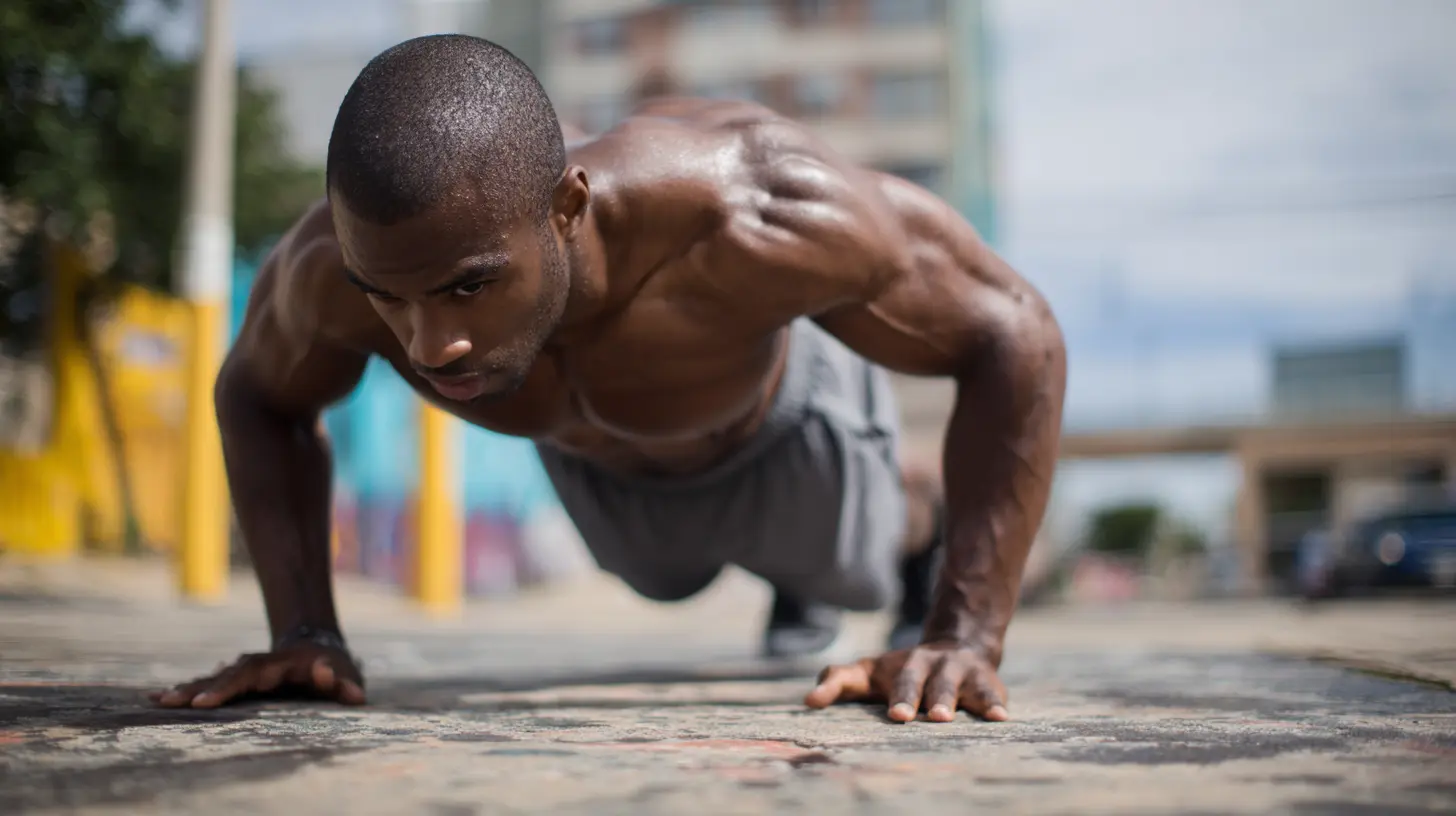
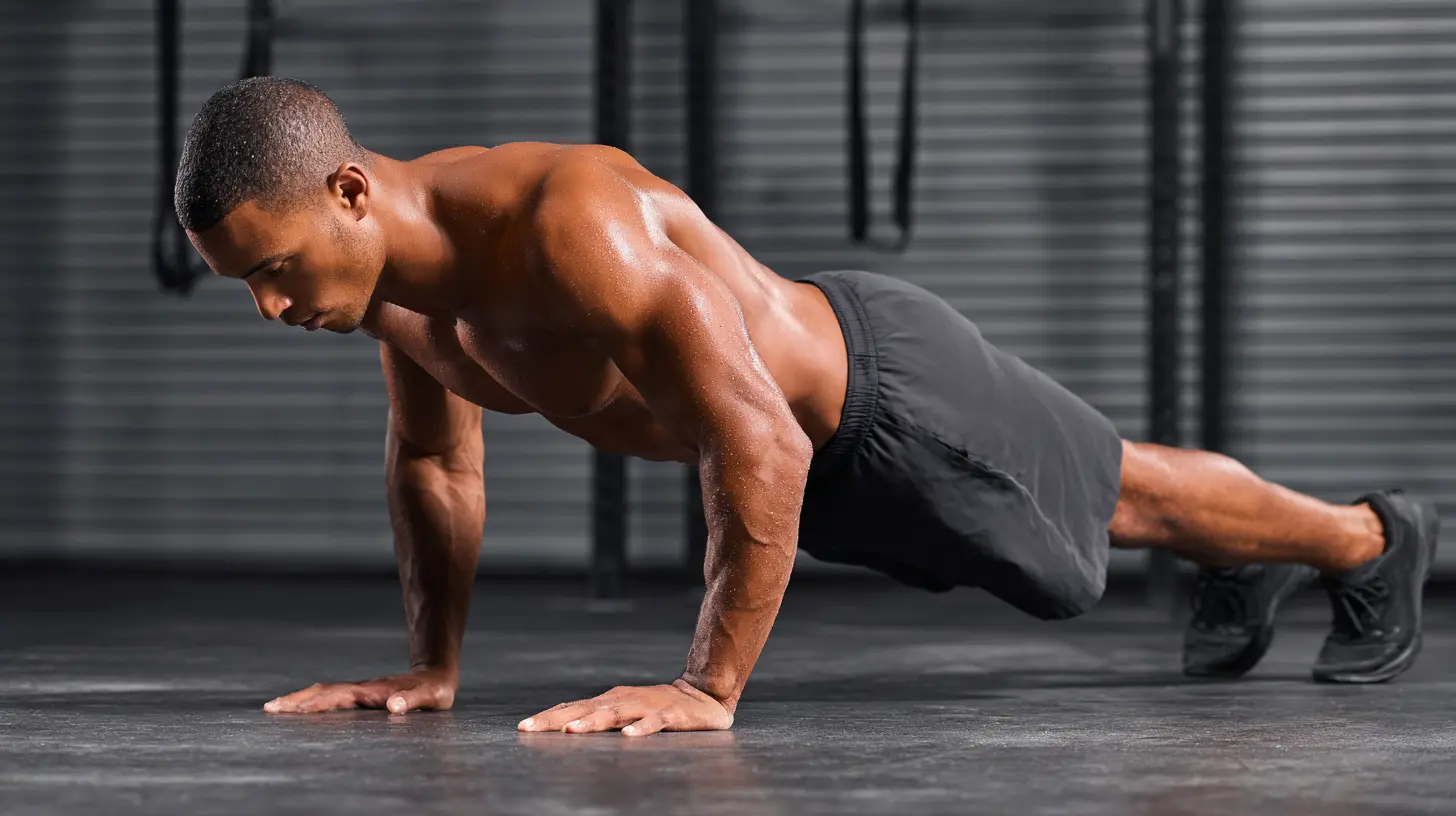
The push-up is the standard, but the standard is rarely the best choice for a given person. The incline push-up, hands elevated on a bench or step, is the correct starting point for anyone who cannot complete eight clean reps on the floor. The decline push-up, feet elevated, shifts more load to the shoulders and upper chest. The archer push-up and the one-arm push-up progression build unilateral pressing strength that most gym programs ignore entirely.Why the push-up beats the bench press for general health: it trains the serratus anterior and the deep scapular stabilizers far more because your shoulder blades are free to move. That scapular control is what keeps shoulders healthy over decades.
Common mistake: letting the hips sag and calling it core work. A push-up is a moving plank. If your lower back arches, you are training a different exercise than the one you think.
Horizontal Pull
This is where most bodyweight programs fall apart. Pulling is harder to load without equipment, so people skip it, and their posture pays the price. The fix is the inverted row, done under a sturdy table, a low bar, or a set of rings.The inverted row is deceptively scalable. The more horizontal your body, the harder it is. Elevating your feet increases difficulty further. Pausing at the top for two seconds turns a moderate row into a serious upper-back builder.
If you have no equipment at all, the towel row or doorframe row works in a pinch, but understand the limitation: the resistance is inconsistent and the setup can be unsafe. Treat it as a stopgap, not a staple.
Squat
The bodyweight squat is a mobility drill more than a strength exercise for most trained people. The real strength builders are the split squat, the Bulgarian split squat, the shrimp squat, and the pistol squat.The split squat family deserves more attention than it gets. Because your stance is staggered, you can drive most of the load through the front leg while the back leg assists balance. That makes it a bridge between a two-leg squat and a true single-leg squat. If you can do fifteen clean Bulgarian split squats per leg with a two-second pause at the bottom, you have built meaningful leg strength without touching a barbell.
When to avoid deep single-leg work: if you have unresolved knee pain, patellar tendinopathy, or poor ankle dorsiflexion, the pistol squat will aggravate rather than fix the problem. Regress to a box squat to a controlled depth and address the mobility first.
Hinge
The hinge is the hardest pattern to train with bodyweight alone, because the glutes and hamstrings respond well to heavy external load. The best bodyweight options are the single-leg Romanian deadlift, the sliding leg curl, and the Nordic curl progression.The Nordic curl is the standout. It is one of the few bodyweight exercises that can produce meaningful hamstring strength and injury resilience, provided you progress carefully. Start with band-assisted or eccentric-only versions. Doing full Nordic curls before you have the eccentric strength to control the descent is a recipe for a pulled hamstring.
Why the hinge matters even if you never deadlift: hip extension power is the engine behind sprinting, jumping, and standing up from a chair. Neglecting it because it is awkward to train with bodyweight is a mistake.
Vertical Push and Pull
Handstand push-up progressions and pull-up variations cover these patterns. The pike push-up is the accessible entry point for vertical pressing. The pull-up, if you have a bar, remains the single best test of relative upper-body strength.If you cannot do a pull-up yet, do not just hang and hope. Use negatives, band assistance, or the inverted row as a builder. The path to a first pull-up is a progression, not a single exercise.
Carry, Rotate, and Brace
Loaded carries usually require weight, but bodyweight equivalents exist. The hollow body hold, the side plank, the bird dog, and the dead bug train anti-extension and anti-rotation. These are not glamorous, but they are what keep your spine safe when you lift something heavy at an awkward angle.
Building the Session: Three Templates That Work
Template 1: The Minimalist Strength Session
Five movements, low reps, long rest. Push-up variation, inverted row or pull-up, split squat, single-leg Romanian deadlift, hollow body hold. Three to five sets each, two to three minutes rest. This takes about thirty minutes and builds genuine strength for anyone below an advanced level.Template 2: The Density Circuit
Pick four movements that cover push, pull, squat, and hinge. Set a timer for fifteen minutes. Do as many quality rounds as you can, resting only as needed. This builds work capacity and is excellent when time is short. It is a poor choice for maximal strength because fatigue degrades technique.Template 3: The Skill and Mobility Session
Spend twenty minutes on handstand practice, pistol squat progressions, and deep squat holds. Low intensity, high attention. This is the session most people skip and the one that pays off most over years, because it maintains the positions your joints need.Progression Without Equipment
Progression in bodyweight training comes from four levers, and you should use all of them:- Leverage. Move from incline to flat to decline. Move from two legs to one.
- Range of motion. Elevate the front foot in a split squat. Deficit push-ups.
- Tempo. Slow the eccentric to three or four seconds. Pause at the hardest point.
- Density. Same work in less time, or more work in the same time.
Most people only use reps, which is the weakest lever. Adding reps indefinitely turns strength work into endurance work. If you can do twenty push-ups, doing twenty-five is not progression, it is repetition. Move to a harder variation instead.
Common Mistakes and Misconceptions
"Bodyweight is for beginners." False. The one-arm push-up, the pistol squat, the Nordic curl, and the handstand push-up are advanced by any standard."You cannot build muscle with bodyweight." You can, if you train close to failure with sufficient volume and use progressions that keep the stimulus high. The limiting factor is usually the practitioner's patience, not the method.
"More reps is always better." Past a certain point, high reps train endurance and joint irritation rather than strength. Use harder variations.
"You need to feel the burn." Metabolic burn is not a reliable indicator of a productive session. Technique quality and progressive overload are.
Skipping the warm-up. Bodyweight training often uses end-range positions, like a deep squat or a full overhead reach. Cold tissue does not tolerate those well. Five minutes of joint preparation is not optional.
Integrating Bodyweight Work into a Weights Program
The best use of bodyweight training for someone who already lifts is as a complement, not a replacement. Put single-leg work after your heavy bilateral lifts to add volume without spinal loading. Use inverted rows as a warm-up for pulling days to activate the scapular muscles. Use hollow body holds and side planks as finishers to train trunk stability in positions a barbell cannot reach.If you are training for a specific sport, match the bodyweight work to the demands. A climber benefits from pull-up variations and lock-offs. A runner benefits from single-leg strength and hip stability. A martial artist benefits from rotational control and the ability to get off the floor quickly. Generic circuits are fine for general fitness, but specificity wins for performance.
When Bodyweight Training Is Not Enough
Be honest about the ceiling. If your goal is maximal lower-body strength, you will eventually need external load. If your goal is maximal upper-body pressing strength, the same applies. If your goal is bone density, loaded carries and heavy squats outperform bodyweight work for most people, though jumping and impact work have their own value.The right answer is almost never "only bodyweight" or "never bodyweight." It is "bodyweight where it is best, external load where it is best." That is a more sophisticated position than either camp usually takes.
A Practical Starting Point
If you are rebuilding after time off, start with three sessions per week. Each session: one push, one pull, one squat, one hinge, one brace. Two to three sets, leaving two reps in reserve. Progress by moving to a harder variation every two to three weeks, not by adding reps forever.If you are already strong, keep two bodyweight sessions per week focused on single-leg strength, scapular control, and trunk stability. Treat them as maintenance for the qualities barbells neglect.
If you are short on time, the density circuit is your friend. Fifteen minutes of focused work beats an hour of distracted work every time.
The body you carry is the most versatile piece of equipment you own. Treat it that way, and it will keep paying dividends long after the novelty of any gadget fades.
all images in this post were generated using AI tools
Category:
Workout PlansAuthor:

Sophia Wyatt