Portion Control for Emotional Eaters: A Practical Approach
23 October 2026
Emotional eating and portion control are usually discussed as separate problems. One is framed as a psychological issue, the other as a matter of measurement and discipline. In practice, they are tightly connected, and treating them separately is one of the main reasons people struggle with both.
Think about what happens during a difficult evening. You are not hungry. You are tired, frustrated, or lonely. You open the cupboard, and the bag of chips disappears while you are barely paying attention. The problem was not that you served yourself too much. The problem was that the serving size was never a decision in the first place. For emotional eaters, portion control is less about measuring cups and more about inserting a moment of choice into a process that has become automatic.
This article takes that reality seriously. It offers a practical framework for using portion control as a tool for emotional eaters, not as a punishment or a rulebook. It explains why conventional portion advice often backfires for this group, what actually works, and how to build habits that hold up on hard days rather than only on good ones.
Why Standard Portion Advice Often Fails Emotional Eaters
Most portion control guidance assumes a rational eater. It says: read the label, measure your serving, use a smaller plate, stop when you feel full. These suggestions are not wrong. They simply assume a person who is present, calm, and able to notice internal signals. Emotional eating happens precisely when those conditions are absent.There are three specific reasons standard advice misfires.
First, restriction can trigger rebound eating. When a person who uses food for comfort feels deprived, the deprivation itself becomes a stressor. The result is often a cycle of tight control followed by a collapse, where the collapse is larger than the original behavior would have been. A rule like "only one handful of chips" can set up a failure that feels personal and shameful, which then fuels more eating.
Second, portion rules focus on the plate while the real trigger is elsewhere. If the root cause is an unmet emotional need, an argument, or chronic exhaustion, adjusting the plate does not address the cause. It just puts a smaller bandage on a larger wound.
Third, emotional eating is often fast and dissociative. People describe it as "coming to" at the bottom of a container. Portion control tools that require attention in the moment, such as weighing food or logging every bite, demand exactly the cognitive presence that emotional eating shuts down.
None of this means portion control is useless for emotional eaters. It means it has to be adapted. The goal is not to police intake but to make eating more visible, more deliberate, and less loaded with shame.
Reframing What Portion Control Is For
For emotional eaters, the most useful reframe is this: portion control is not a diet tool. It is an awareness tool.A diet tool says "eat less." An awareness tool says "notice what you are doing while you are doing it." The distinction matters because awareness can be built gradually and without judgment, while restriction tends to collapse under pressure.
When portion control works well for emotional eaters, it does three things:
- It creates a pause between the impulse and the action, which is where choice becomes possible.
- It limits the damage of an episode without requiring perfection, so a difficult night does not become a difficult week.
- It separates the emotional need from the food response, so the two can be examined independently.
Notice that none of these goals require strict measuring. They require structure that supports presence. That is the standard to judge any portion strategy against: does it help you stay awake at the table, or does it just add another rule to break?
The Pre-Portion Principle
The single most practical habit for emotional eaters is pre-portioning. This means deciding how much you will eat before you start eating, ideally when you are calm and not in the middle of a craving.The reason this works is mechanical. Emotional eating thrives on open containers and ambiguous quantities. A family-sized bag of chips has no natural stopping point. A bowl that you filled yourself does. The decision moves from the moment of vulnerability to a moment of relative clarity.
Pre-portioning can take several forms, and the right one depends on your living situation and temperament.
Single-serve packaging. Buying snacks in individual portions removes the in-the-moment decision entirely. The trade-off is cost and packaging waste, and some people find that single-serve packs feel infantilizing or trigger a "just one more" response. It works best for foods that are genuinely hard to moderate.
Portioning at purchase. When you get home from the store, divide bulk items into containers or bags before putting them away. This front-loads the effort and keeps the default serving visible. It requires a little time and some storage space, but it is one of the most reliable methods for people who eat at night.
Plate-based portions. Serving food onto a plate and putting the rest away before sitting down is a simple, old-fashioned habit that remains effective. The key detail is putting the remainder out of reach, ideally in a closed container in a cupboard rather than on the counter.
The "serve once" rule. Decide that you will serve yourself once and that any second serving requires standing up, walking to the kitchen, and deliberately choosing it. This adds friction without forbidding anything. Many people find that the second serving never happens, not because it is banned but because the automatic momentum is broken.
What these methods share is that they relocate the decision. They do not rely on willpower at the moment of craving, which is precisely when willpower is weakest.

Building Friction Without Building Shame
Friction is the unsung hero of behavior change. Making a behavior slightly harder to do, without making it forbidden, reduces it more reliably than moral pressure ever will.For emotional eaters, friction should be applied to the environment, not to the self. Examples include:
- Keeping trigger foods out of the house entirely, or stored in an inconvenient place.
- Not eating directly from packaging.
- Keeping serving utensils small, so portions build more slowly.
- Eating at a table rather than at the counter or in front of a screen.
- Leaving the kitchen after serving, rather than staying near the food.
The critical rule is that friction must not come with a lecture. The moment a practical setup becomes a moral test, it starts generating shame, and shame is a well-known trigger for more emotional eating. If you eat the whole pre-portioned bowl and then go back for more, the setup has not failed. It has simply revealed that the emotional need was larger than the portion that night. That is information, not a verdict.
This is where many people go wrong. They treat a portion rule as a contract with themselves, and breaking it as a breach of trust. A more useful stance is to treat portions as experiments. You are gathering data about when they help and when they do not.
Pairing Portions With Emotional Check-Ins
Portion control alone does not address the emotional function of eating. It works far better when paired with a brief check-in before eating.This does not need to be elaborate. A simple two-question pause is enough:
1. What am I feeling right now?
2. Am I hungry, or am I something else?
The purpose is not to talk yourself out of eating. It is to make the choice conscious. Sometimes the answer is "I am hungry and I want this food," and eating it is entirely appropriate. Sometimes the answer is "I am not hungry, I am wound up from a meeting," and simply naming that changes what happens next. You might still eat, but you might eat a portion rather than a package, or you might choose something different.
A useful analogy is a traffic light. Green means genuine hunger and eating is the right response. Yellow means mixed signals, so slow down and portion deliberately. Red means the eating is clearly emotional and not hunger-driven, so consider whether food is really what you need, or whether you need something else first and food second.
The traffic light is not a rule system. It is a way of noticing. Over time, people who practice this check-in often find that the red-light episodes become shorter and less frequent, not because they are suppressing them but because they are catching them earlier.
The Role of Meal Structure
Emotional eating is more likely when the day has no structure. Skipping meals, grazing, and eating at random times all make it harder to tell emotional hunger from physical hunger, because physical hunger is never fully resolved and never fully absent.Regular meals, eaten at roughly consistent times, do two things. They reduce the physical hunger that muddies the emotional signal, and they create natural portions. A meal has a beginning and an end. A grazing pattern does not.
This is why many emotional eaters find that the most effective portion strategy is not snack control but meal regularity. When breakfast, lunch, and dinner are reasonably consistent, the urge to eat outside those times often becomes easier to read. It is more clearly emotional, because the body is not actually hungry.
There is a trade-off. Rigid meal schedules can feel restrictive and can clash with shift work, caregiving, or unpredictable jobs. The goal is not perfection but a rough rhythm. Even a loose structure, such as eating something within an hour of waking and not going more than five or six hours without food during the day, tends to help.
Portion Sizes and the Fullness Signal
Emotional eaters often have difficulty noticing fullness, partly because eating is fast and partly because the emotional payoff comes from the act of eating rather than from satiety. Portion control can help retrain this awareness, but only if it is used as a prompt to check in rather than as a hard limit.A practical method is to serve a moderate portion, eat it slowly enough to notice, and then pause before deciding on more. The pause is the important part. Many people find that after a genuine pause of a few minutes, the desire for more has faded, not because they were restricting but because the body had time to register what it had.
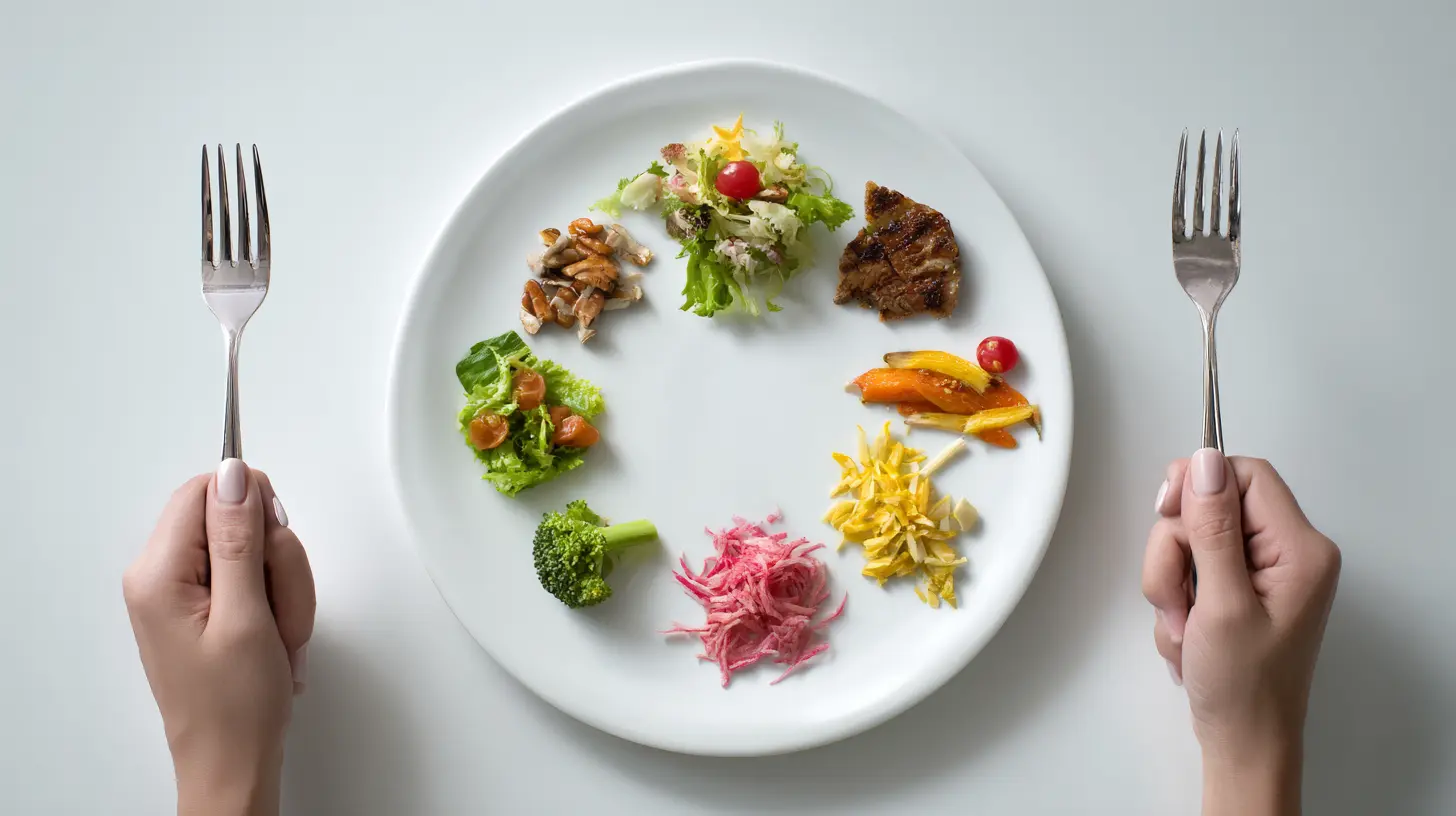
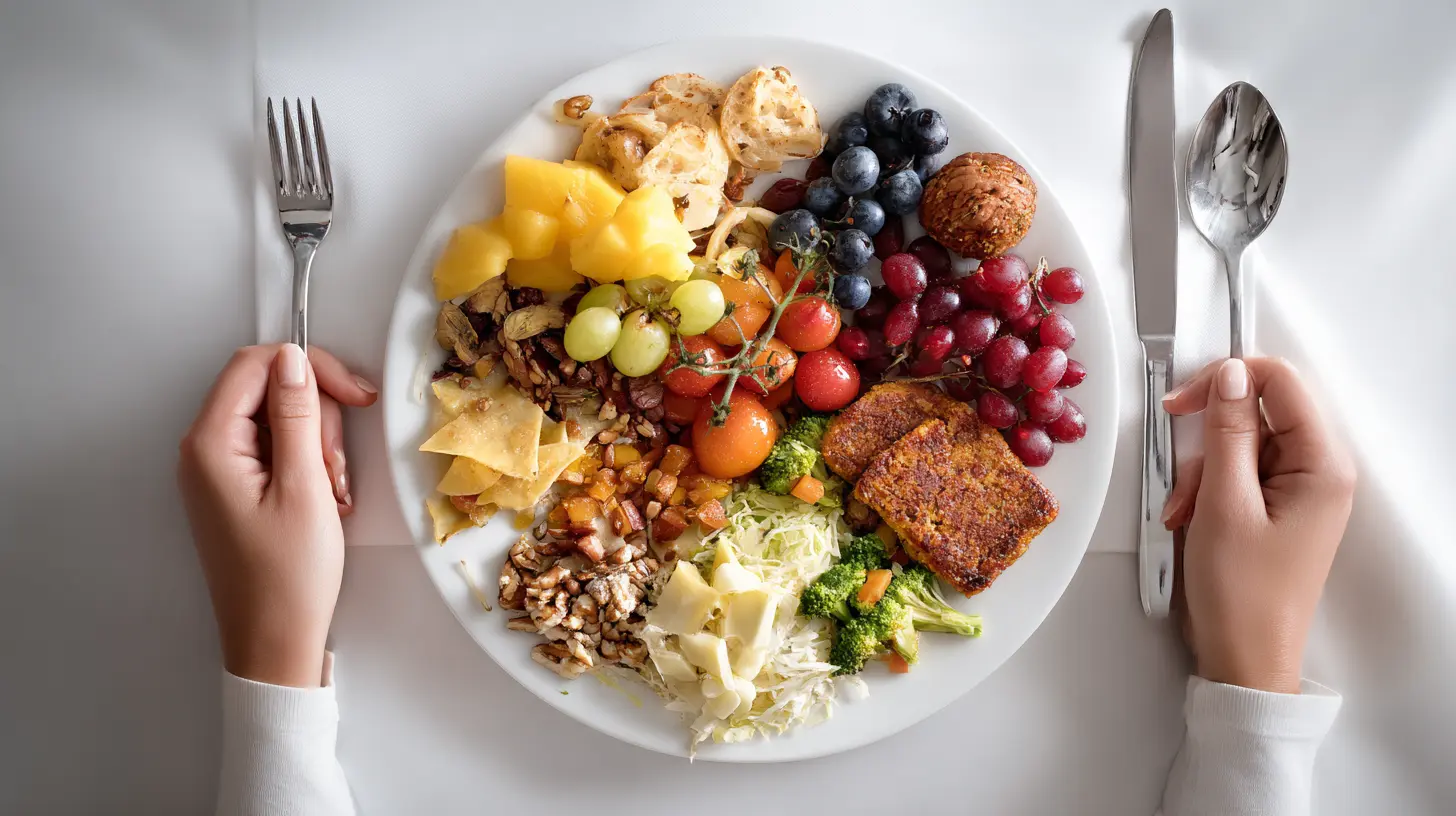
Another method is to use the plate as a visual guide rather than a measuring tool. Filling roughly half the plate with vegetables or fruit, a quarter with protein, and a quarter with a starch is a common and flexible template. It is not precise, and it does not need to be. Its value is that it produces a balanced portion without requiring calculation, which makes it easier to use on tired evenings.
What does not work well is weighing every food and logging every gram. For some people, especially those with a history of disordered eating, this level of tracking can intensify obsession and anxiety. If portion control starts to feel like surveillance, it has stopped being useful. A good rule of thumb is that any method which makes you think about food more, rather than less, is probably the wrong method for you.
Common Mistakes and Misconceptions
Several recurring mistakes undermine portion control for emotional eaters.Mistake one: treating portions as punishment. If a portion is chosen to compensate for earlier eating or to "make up" for a bad day, it becomes part of a shame cycle. Portions should be chosen for the current meal, not as penance for the last one.
Mistake two: ignoring the emotional trigger. A smaller bowl of ice cream does not solve loneliness. It may reduce the volume eaten, but if the underlying need is never addressed, the eating will simply find another outlet. Portion control buys time and reduces harm. It is not a substitute for addressing the emotion.
Mistake three: applying rules rigidly across all contexts. A portion that works on a Tuesday evening may be completely wrong at a birthday dinner or during a stressful week. Flexibility is not a loophole. It is a requirement for sustainability.
Mistake four: confusing emotional eating with binge eating. They overlap but are not the same. Emotional eating is a response to feelings. Binge eating involves eating a large amount in a short time with a sense of loss of control, and it is a recognized clinical issue. If eating episodes feel genuinely uncontrollable, involve large quantities, or are followed by intense shame or purging, professional support is important. Portion strategies are not a treatment for an eating disorder.
Mistake five: expecting the first attempt to work. Habits take repetition. Most people need several weeks of experimenting before a portion strategy feels natural. Treating early failures as evidence that the approach does not work is premature.
When Portion Control Is the Wrong Tool
Portion control is not universally appropriate, and it is worth being honest about that.For people with a history of anorexia, restrictive eating, or obsessive food tracking, portion control can reinforce harmful patterns. The same is true for people who find that any food rule triggers rebellion and subsequent overeating. In these cases, focusing on emotional regulation, regular eating without measurement, and professional guidance is usually more appropriate than tightening portions.
Portion control is also a poor fit as a first intervention. If a person is chronically sleep-deprived, highly stressed, or in an unstable living situation, the emotional eating is likely a symptom of those conditions. Addressing sleep, stress, and support will do more than any plate strategy. Portions become useful once the baseline is reasonably stable.
The general principle is that portion control should reduce mental load, not add to it. If it is making you more anxious, more preoccupied with food, or more secretive about eating, it is the wrong tool at the wrong time.
A Practical Starting Plan
For readers who want a concrete place to begin, here is a sequence that tends to work well. It is deliberately gradual, because stacking too many changes at once is a common cause of collapse.Week one: observe without changing. For a week, simply note when you eat, what you eat, and what you were feeling beforehand. No judgment, no rules. This builds the awareness that every later step depends on.
Week two: add one pre-portion habit. Choose a single trigger food, the one most likely to disappear in one sitting, and pre-portion it. Keep everything else the same. The goal is to prove to yourself that the habit is possible, not to overhaul your diet.
Week three: add the two-question check-in. Before eating, ask what you are feeling and whether you are hungry. Do not try to change the outcome. Just ask.
Week four: introduce meal structure. Aim for three meals at roughly consistent times. Do not worry about what is on the plate yet.
Week five and beyond: combine and adjust. By this point you will have data. You will know which foods need pre-portioning, which times of day are vulnerable, and which emotions drive the eating. Use that information to refine your setup rather than to criticize yourself.
This plan is not the only way to proceed, and it will not suit everyone. Its logic is that awareness comes before control, and structure comes before restriction. Emotional eaters who skip straight to restriction usually end up back where they started.
The Long View
Portion control for emotional eaters works best when it is understood as one part of a larger skill: the ability to notice what you are doing while you are doing it. The portion is a prompt. The prompt creates a pause. The pause creates a choice. Over time, the choice becomes easier, not because you have become more disciplined, but because you have become more present.There will still be nights when the bowl is refilled and the check-in is forgotten. That is not failure. It is the normal texture of changing a long-standing habit. What matters is whether the overall trend moves toward more awareness and less automatic eating. A portion strategy that survives a bad night without collapsing into a week of shame is doing its job.
If emotional eating is severe, persistent, or tied to significant distress, working with a qualified professional is the most responsible step. Portion control is a practical tool, not a cure, and it works best when it is part of a broader approach that takes both the food and the feelings seriously.
all images in this post were generated using AI tools
Category:
Portion ControlAuthor:

Sophia Wyatt

