Mindful Eating and the Digital Age: Coping with Distractions
1 October 2026
The Meal That Never Really Happens
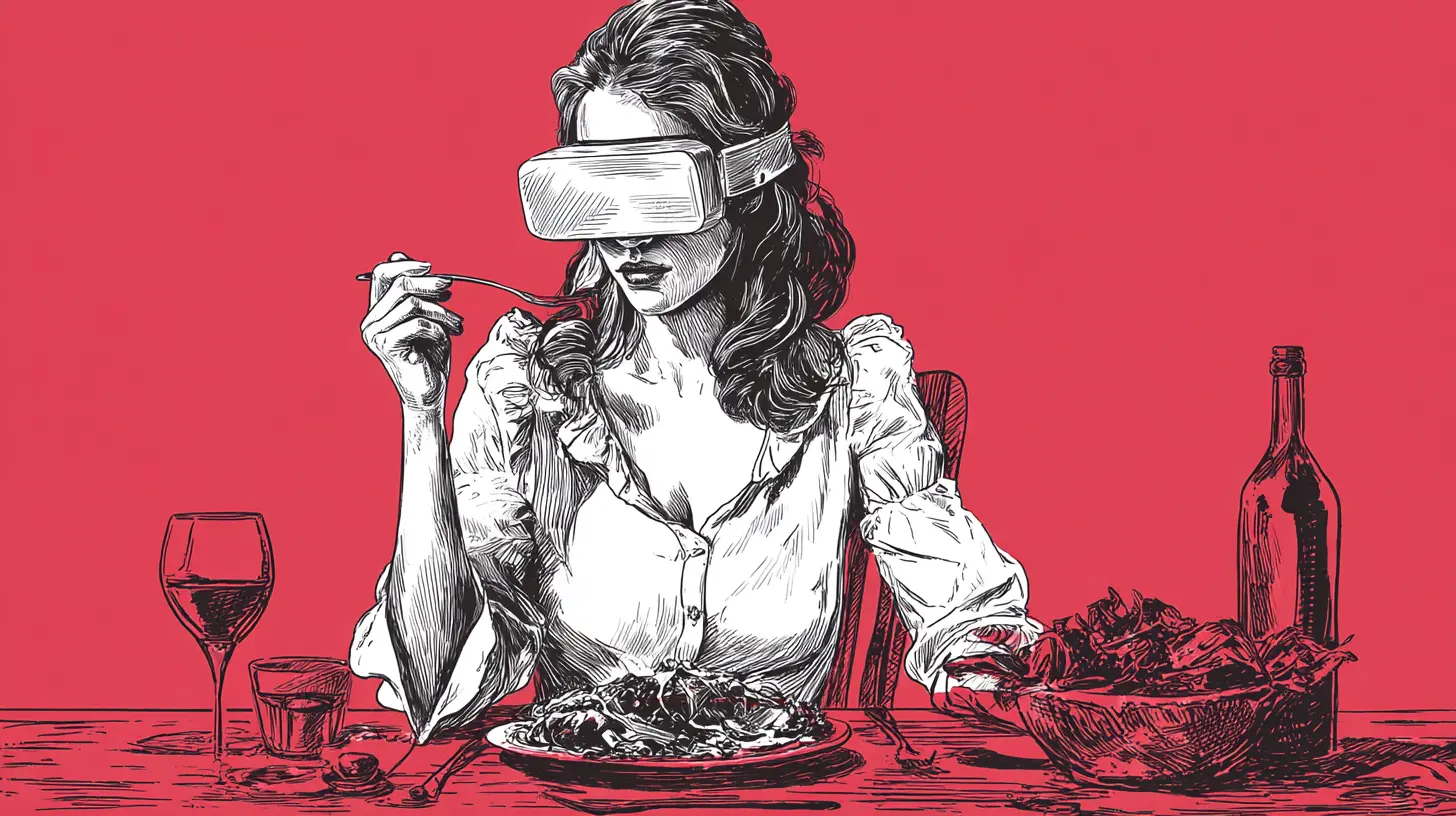
Picture a typical weekday lunch. A bowl of soup sits on the desk. A phone leans against a coffee mug, streaming a show. Between spoonfuls, a thumb scrolls through messages and news. Twenty minutes later, the bowl is empty. The person cannot recall the taste of the soup, how warm it was, or whether it satisfied anything at all. They only know they ate, because the bowl is empty.This scene repeats in millions of homes, offices, cars, and cafeterias every day. The digital age did not create distracted eating. People have eaten in front of campfires, televisions, and newspapers for generations. But smartphones, streaming platforms, and social feeds have intensified the problem in ways earlier distractions never could. The device is always within reach, it responds instantly, and it is engineered by teams of experts to hold attention for as long as possible.
Mindful eating, the practice of paying deliberate, nonjudgmental attention to the experience of eating, stands in direct opposition to this engineering. It asks a simple but demanding question: can you be present for your own meal? For many people in the digital age, the honest answer is rarely.
This article examines why digital distraction hijacks meals, what the consequences actually are, and how to build a sustainable mindful eating practice without abandoning technology entirely. The goal is not technophobia. The goal is awareness, and the ability to choose when a screen belongs at the table and when it does not.

What Mindful Eating Actually Means
Mindful eating is often misunderstood as chewing slowly, eating in silence, or treating food as a spiritual exercise. Those can be parts of it, but they miss the core.Mindful eating means bringing awareness to the physical and emotional experience of eating as it happens. That includes noticing hunger and fullness cues, the appearance and aroma of food, the act of chewing, the flavors as they change, and the thoughts and feelings that arise before, during, and after a meal. It also includes noticing why you are eating. Is it hunger? Boredom? Stress? Habit? Social pressure? The presence of a screen?
The practice has roots in Buddhist meditation traditions, but its modern clinical form was popularized in the late twentieth and early twenty-first centuries by researchers and clinicians studying eating behavior. It is not a diet. It does not prescribe specific foods or forbid others. It does not promise weight loss, although some people experience changes in eating patterns as a side effect. It is a skill of attention, and like any skill, it develops with repetition.
A useful distinction: mindful eating is not the same as eating mindfully at every meal forever. That standard is unrealistic and can breed guilt. The realistic goal is to increase the proportion of meals eaten with awareness, and to notice, without judgment, when awareness is absent.

Why the Digital Age Is Different
Older distractions, such as television, were passive and stationary. A television show occupies one screen in one room. It competes with a meal, but it does not follow you to the kitchen, the bathroom, or the car.Smartphones are different in at least four ways.
First, they are always present. A phone within arm's reach is a phone that can interrupt any moment, including the moment between two bites.
Second, they are interactive. A television does not ask you to respond. A notification, a message, or a comment does. Each interaction pulls attention further from the plate.
Third, they are designed to be compelling. Features like infinite scroll, autoplay, and personalized recommendations exist to extend engagement. Food does not compete on equal terms with a feed engineered to be irresistible.
Fourth, they fragment attention rather than replace it. Watching television during a meal is a single competing activity. Using a phone often means switching between multiple apps, conversations, and content streams within a single meal. Attention never settles anywhere, including on the food.
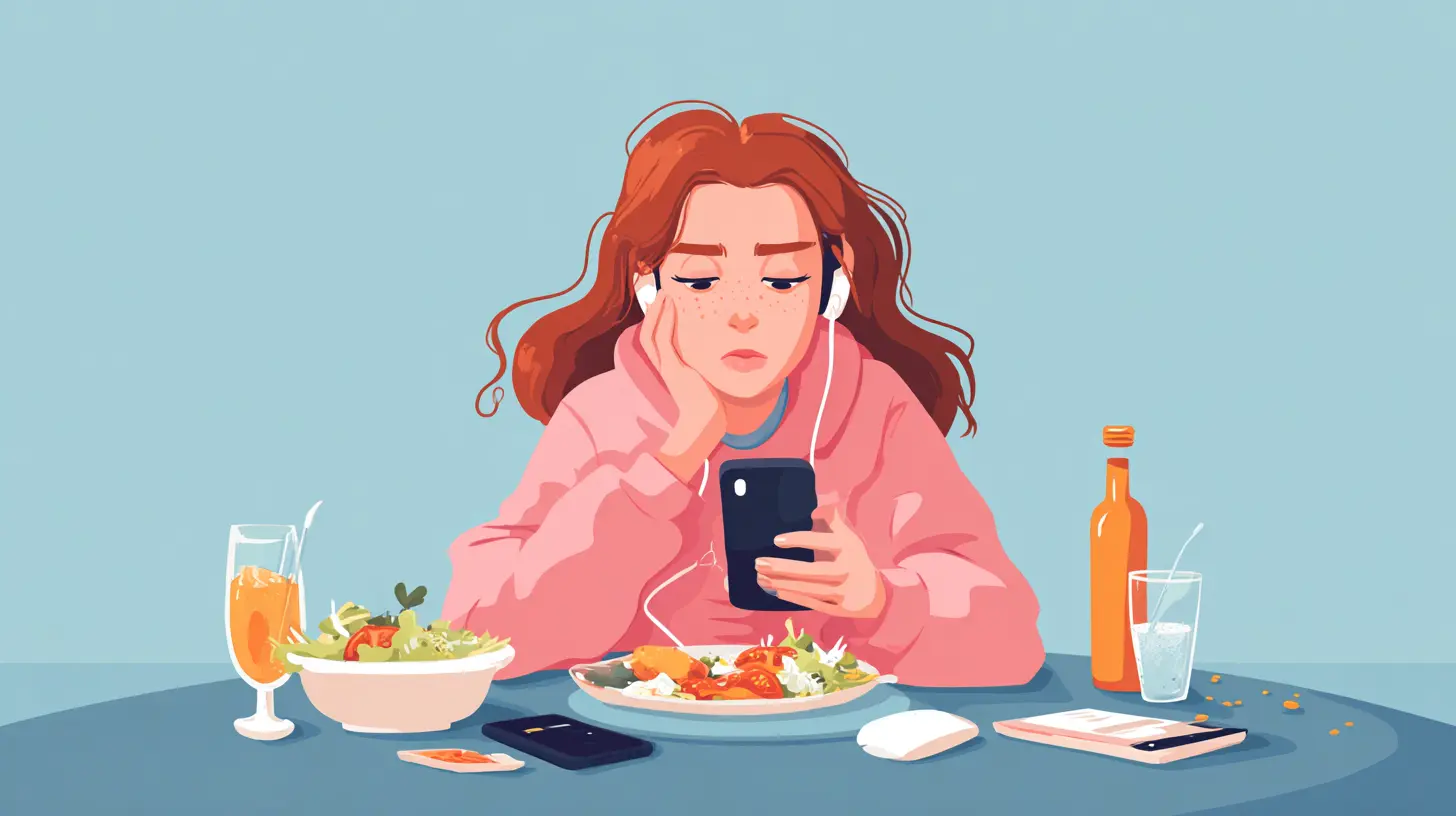
The result is that eating becomes background activity. The body continues the mechanical process of chewing and swallowing while the mind is elsewhere. This is the opposite of what mindful eating cultivates.
What Happens to the Body and Mind
Satiety Signals Get Missed
Fullness does not announce itself like a bell. It builds through hormonal and neural signals, including stretch receptors in the stomach and hormones such as leptin and cholecystokinin, that reach the brain over the course of a meal. These signals take time, often around twenty minutes, to register as the sensation of being satisfied.When attention is on a screen, those signals still arrive, but they are easy to miss. A person may eat past comfortable fullness without noticing until physical discomfort sets in. Over time, repeatedly missing satiety cues can weaken the connection between eating and the sensation of enoughness. The body still sends the message. The mind stops reading it.
Taste Becomes Invisible
Flavor perception depends on attention. Research on attention and perception suggests that when the mind is occupied elsewhere, the brain processes less detail from the senses. A meal eaten while scrolling may technically deliver the same nutrients, but the experience of tasting it is diminished. This matters because taste is part of how eating satisfies us. When meals feel unsatisfying, people often eat more afterward, searching for the pleasure they missed.Eating Pace Accelerates
Distracted eating tends to be faster. When the hand is reaching for a phone, it is often also reaching for food with less awareness of pacing. Fast eating is associated with eating more in a single sitting and with digestive discomfort. Slower eating gives satiety signals time to arrive and gives the mind time to register what is being consumed.Emotional Eating Gets Reinforced
Screens are powerful mood regulators. Boredom, anxiety, loneliness, and stress all ease, temporarily, when a phone provides stimulation. When eating and screen use are paired repeatedly, the brain begins to associate food with emotional relief from whatever the screen is distracting from. This can strengthen patterns of eating in response to emotions rather than hunger. The screen becomes part of the emotional eating loop, not just a bystander.Memory of the Meal Weakens
Memory of a meal influences later eating. Studies on memory and appetite suggest that when people do not clearly remember eating, they tend to eat more at the next opportunity. A meal eaten while distracted is poorly encoded in memory. It is as if the meal barely happened, and the body responds accordingly.The Trade-Offs: When Screens at Meals Are Not Automatically Bad
A balanced view matters here. Not every screen at every meal is harmful, and treating all device use as a moral failure can create anxiety that undermines the very awareness mindful eating seeks to build.There are situations where screen use during eating serves a genuine purpose. Eating alone in a new city, a video call with family can provide connection that makes the meal more enjoyable, not less. A person recovering from an eating disorder may use a show as a coping tool during meals while working with a clinician, and that can be a legitimate part of treatment. Shared viewing during a family dinner, when everyone is engaged together, can be a bonding ritual rather than a distraction.
The key distinction is between deliberate and automatic use. Choosing to watch something during a meal, knowing why, and staying aware of the food is different from reflexively grabbing a phone the moment a plate appears. One is a decision. The other is a habit operating without consent.
Ask yourself: is this screen adding to the meal, or replacing it? Is it connecting me to someone, or disconnecting me from my food and my body? Would I choose this if I paused to decide? There is no universal right answer, but the question itself is the practice.
Common Mistakes and Misconceptions
Mistake: Treating Mindful Eating as a Diet
Mindful eating is not a weight loss program with a spiritual label. It is an attention practice. People who approach it as a diet often become rigid, moralize about food, and abandon the practice when weight does not change on schedule. The benefits, when they come, tend to be about relationship with food and with the body, not numbers on a scale.Mistake: All-or-Nothing Thinking
Some people decide that if they cannot eat every meal mindfully, the practice is pointless. This is like deciding that if you cannot meditate for an hour, breathing is useless. Five conscious breaths before a meal is a real practice. One mindful bite is a real practice. Consistency at a small scale outperforms occasional perfection.Mistake: Using Guilt as Motivation
Guilt is a poor long-term motivator and a common trigger for disordered eating patterns. If you notice you ate an entire meal while scrolling, the useful response is curiosity, not punishment. What was happening? Were you stressed? Tired? Bored? The information is more valuable than the guilt.Misconception: Mindfulness Requires Silence and Solitude
You can eat mindfully in a loud cafeteria with friends. Mindfulness is about attention, not environment. You can also eat mindfully while watching a show, if you periodically return attention to the food. The practice is flexible, and rigidity is its own form of distraction.Misconception: Technology Is the Enemy
The goal is not to demonize devices. The goal is to notice their pull and to decide, moment by moment, whether to follow it. A person who can eat with or without a screen, depending on what serves them, has more freedom than someone who has banned all devices but feels anxious without them.Practical Strategies That Actually Work
Start with One Meal
Pick one meal per day, ideally one you eat alone and can control, and make it screen-free. Breakfast is often easiest. Lunch at a desk is often hardest. Choose based on realism, not aspiration. The point is to create a daily laboratory for noticing what eating is like without a screen.Use a Physical Barrier, Not Just Willpower
Willpower is unreliable, especially when a device is designed to override it. Put the phone in another room, or in a drawer, or face down across the table. Physical distance reduces the number of micro-decisions you have to make. Each micro-decision drains attention that could go to the meal.Take Three Breaths Before the First Bite
This is a small ritual with outsized effects. Before eating, pause. Look at the food. Notice its color, steam, or texture. Take three slow breaths. This creates a transition between whatever came before and the act of eating. Transitions are where attention is won or lost.Eat with Your Non-Dominant Hand Occasionally
This sounds gimmicky, but it works for a specific reason: it disrupts autopilot. When the mechanical ease of eating is interrupted, attention returns to the process. You do not need to do this for an entire meal. A few bites are enough to reset awareness.Set a Timer, Not a Rule
If you tend to eat quickly, a gentle timer that reminds you to check in every few minutes can help. The goal is not to eat slowly for its own sake, but to create regular opportunities to notice fullness, taste, and the impulse to reach for the phone.Name What You Notice
Silent or spoken labeling, such as "salty," "crunchy," "still hungry," "getting full," "urge to check phone," strengthens awareness. Naming is a simple cognitive act that keeps attention anchored to the present. It also builds the vocabulary of interoception, the sense of what is happening inside your body.Design Your Environment
The table matters. A phone charging station in another room, a clear table surface, and a visible glass of water all nudge behavior without requiring conscious effort. Environment design beats self-control because it works even on days when self-control does not show up.Use Tech to Support the Practice
Technology is not only the problem. Apps that prompt a pre-meal check-in, reminders to pause, or simple timers can support mindful eating. The trade-off is that using a phone to be mindful of a meal can become another form of phone use. If you try an app, set a clear boundary: use it before the meal starts, then put the phone away.
Building a Sustainable Practice
Mindful eating in the digital age is not a destination. It is a set of small decisions repeated over time. Some meals will be fully present. Some will be lost to a feed. Both are data.The most durable approach tends to combine three elements: a clear intention, a supportive environment, and self-compassion when attention wanders. Intention without environment is fragile. Environment without intention becomes mindless routine. Both without compassion collapse into guilt.
A useful weekly reflection: which meals felt satisfying this week, and which felt like they did not happen? What was different about them? Over time, patterns emerge. Maybe dinners with family are already mindful. Maybe the afternoon snack at the desk is the biggest leak. Maybe the phone is not the issue at all, but fatigue is, and the phone is just what tired hands reach for.
The practice is not about achieving perfect attention. It is about noticing, again and again, that a meal is happening, that a body is being fed, and that this moment, unlike the feed, will not come back.
all images in this post were generated using AI tools
Category:
Mindful EatingAuthor:

Sophia Wyatt
Discussion
rate this article
1 comments
Kaitlin Baker
This article is a breath of fresh air! Mindful eating in our fast-paced world is so important. Love the tips on staying focused while enjoying meals. Let's savor every bite together!
October 1, 2026 at 3:25 AM