How to Embrace Mindful Eating During Holidays and Celebrations
16 September 2026
The holiday table is rarely just about food. It is about memory, identity, obligation, joy, and sometimes grief. A single plate can carry your grandmother's recipe, a co-worker's insistence that you try her dessert, and your own quiet worry about losing control. That is why advice like "just eat slowly" tends to collapse the moment the doorbell rings. Mindful eating during celebrations is not a test of willpower. It is a skill of navigation, and like any skill, it works only when it is adapted to the actual conditions you face.
This article is for people who want to enjoy celebrations without feeling either deprived or regretful afterward. It is not a diet plan, and it is not a lecture about moderation. It is a practical framework built on how attention, appetite, and social pressure actually behave when the holidays arrive.
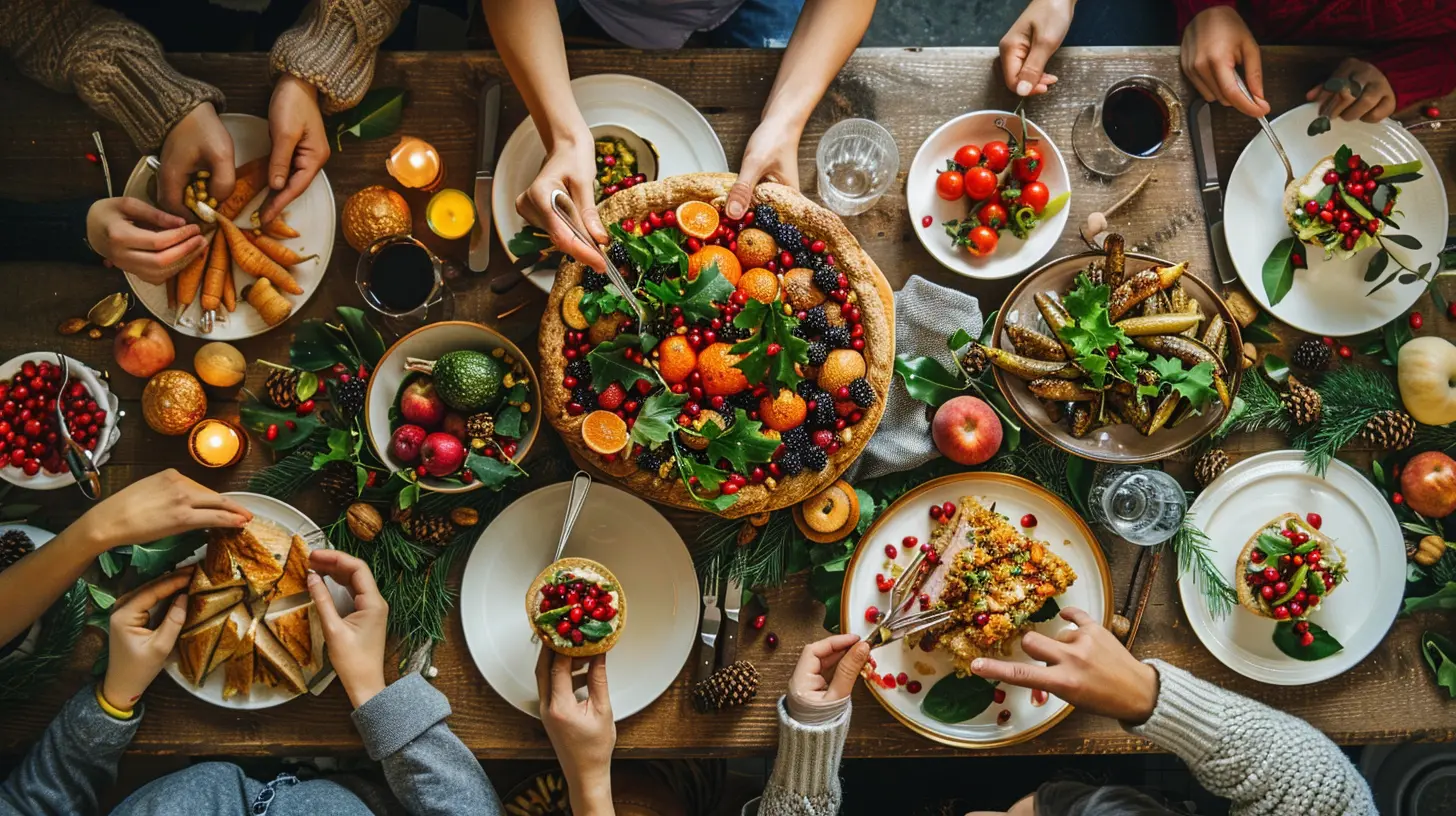
What Mindful Eating Really Means in a Celebration Context
Mindful eating is often described as paying full attention to your food. That definition is technically correct and practically useless at a party. A more useful definition is this: mindful eating is the practice of making food decisions with accurate information about what your body wants and what the situation offers.The distinction matters because most holiday eating problems are not caused by a lack of attention. They are caused by a lack of information or a conflict between two real desires. You genuinely want the pie. You also genuinely want to feel well tomorrow. Mindful eating does not resolve that conflict by picking a winner. It resolves it by helping you see the trade-off clearly enough to choose deliberately.
Consider a common scene. You arrive at a family dinner already slightly hungry because you skipped lunch to "save room." Within twenty minutes, you have eaten two rolls without noticing. Was that mindless? Partly. But the deeper issue was the setup. Skipping lunch created a physiological state that made fast eating almost inevitable. No amount of table-side breathing would have fixed a decision made at noon.
This is the first principle of holiday mindfulness: the most powerful moments of choice happen before you sit down.
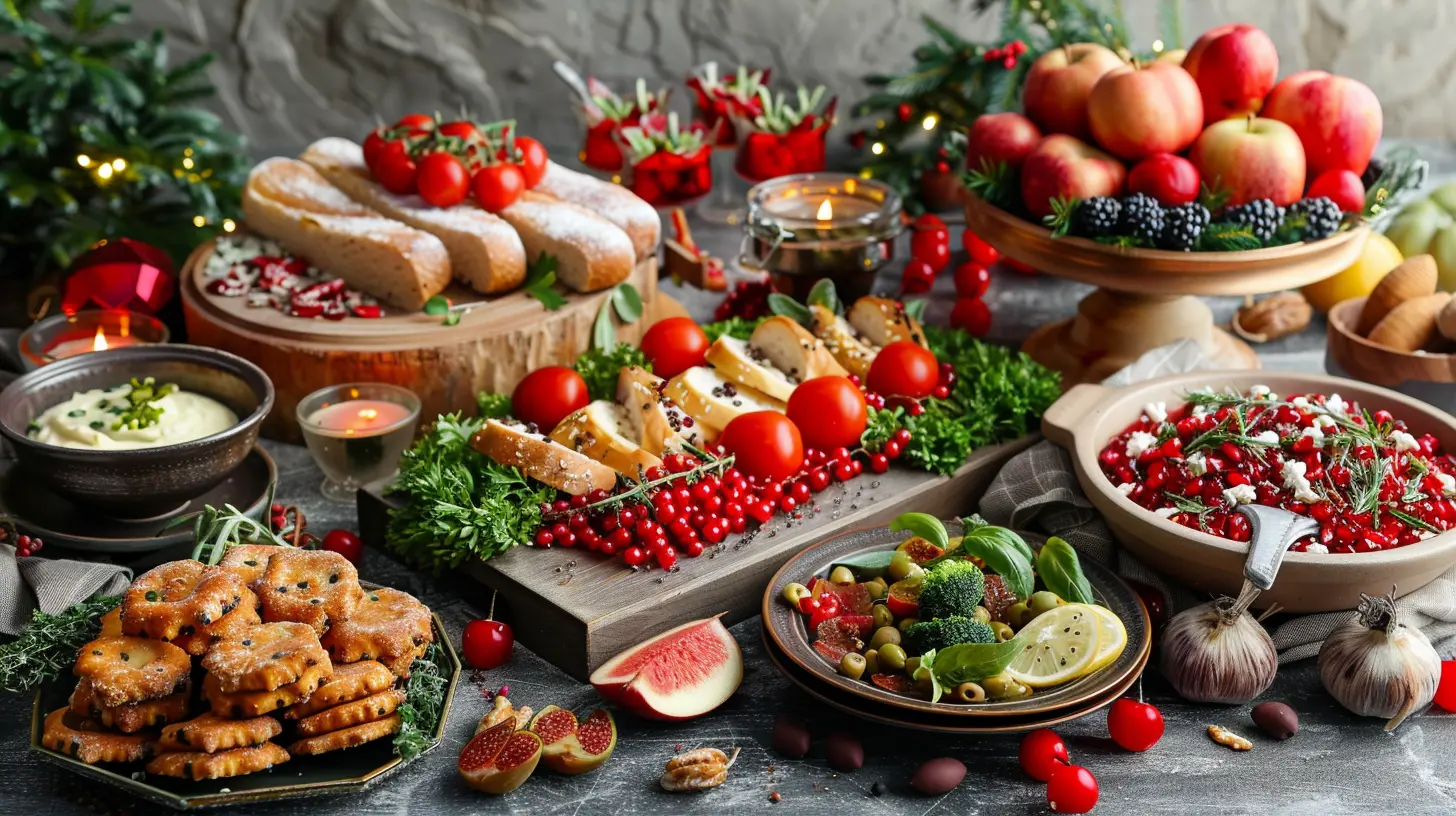
Why Holidays Break Normal Eating Habits
Your everyday eating habits rest on structure. You eat at roughly the same times, from a familiar kitchen, with a predictable portion on a familiar plate. Holidays remove nearly all of that structure at once. Meals shift, portions are served by others, and the food itself is richer, sweeter, and more emotionally loaded than usual.There is also a social dimension that rarely gets named. Food at celebrations functions as communication. Accepting a second helping can mean accepting love. Declining dessert can be read as rejection, even when it is not intended that way. Anyone who has tried to eat lightly at a family gathering knows the pressure is not imaginary.
Finally, holidays are finite. That scarcity changes behavior. If a dish appears only once a year, the rational move is to eat more of it than you would of something available every week. This is not weakness. It is a reasonable response to a real constraint, and any strategy that ignores it will feel like punishment.
Set Intentions That Can Survive Real Life
Most intention-setting fails because it produces rules instead of directions. "I will not eat dessert" is a rule, and rules break under pressure. "I want to leave this meal feeling comfortable and still proud of my choices" is a direction. It gives you something to steer by when the situation changes.A useful intention has three qualities. It is specific enough to guide a decision, flexible enough to survive an unexpected dish, and connected to a value you actually hold. Here are examples that meet those criteria:
- I want to taste the foods that are special to this family, and I am willing to skip the ones I can eat any day.
- I want to stay present with the people at this table, which means not treating the meal as a competition.
- I want to enjoy alcohol without letting it make my food decisions for me.
Notice that none of these mention calories, weight, or restriction. That is deliberate. Intentions built on restriction tend to create a rebound, especially during a season that lasts several weeks. Intentions built on values tend to hold.
It also helps to decide in advance which meals matter most. Not every gathering deserves the same level of attention. A casual office potluck and your mother's holiday dinner are not equivalent events, and treating them as if they were will exhaust you by mid-December.
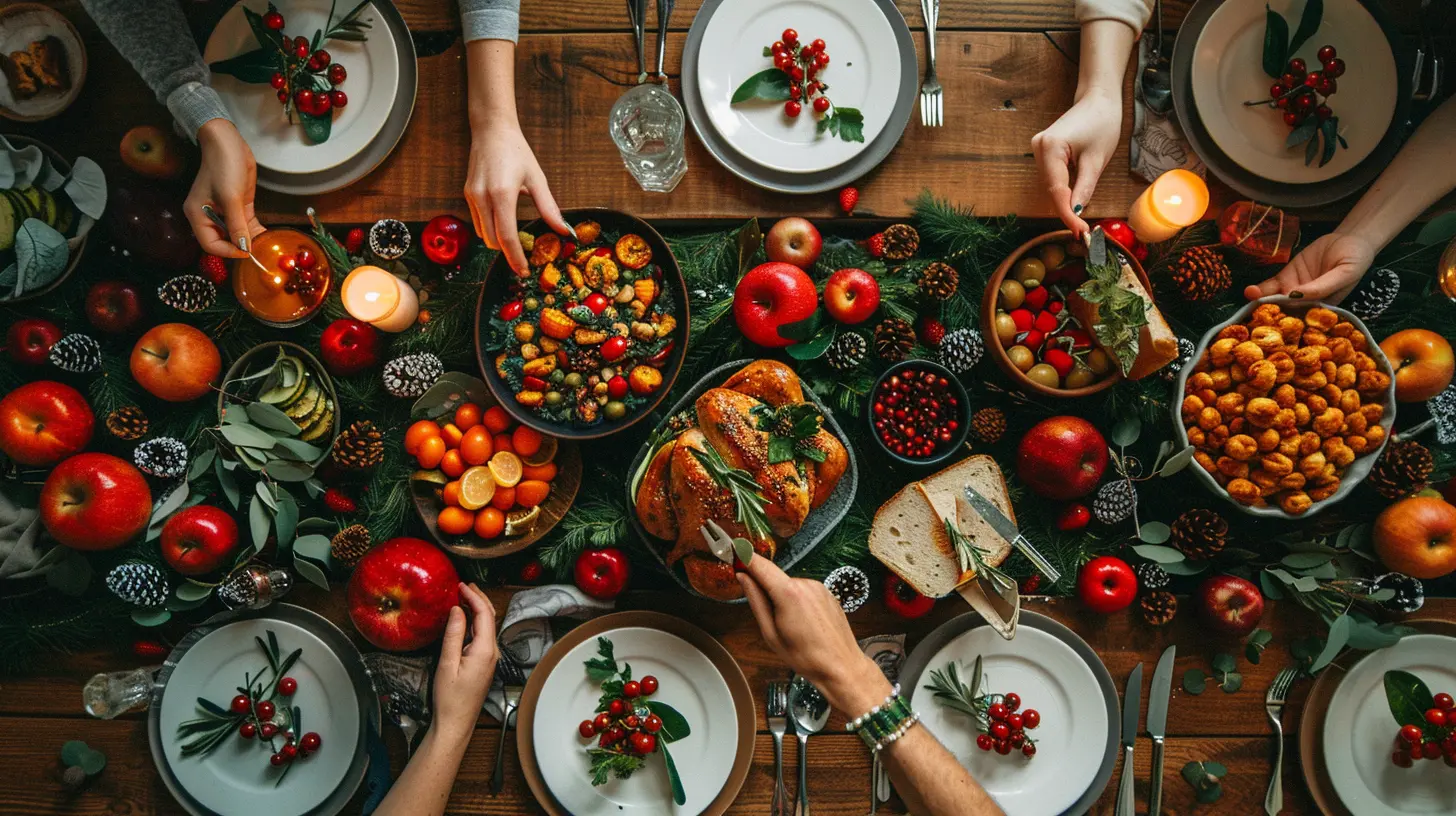
The Physiology You Cannot Think Your Way Around
Mindfulness is not a substitute for biology, and pretending otherwise sets people up for failure. Several physiological facts shape how holiday eating unfolds, and understanding them lets you work with your body instead of against it.Hunger and the speed of eating
Appetite signals lag behind intake. You can eat past fullness before your body registers it, particularly when food is highly palatable and conversation is distracting. Slowing down is not a moral virtue here. It is a way of giving your own feedback system time to report back.The role of alcohol
Alcohol lowers inhibition and blunts satiety cues. This is not a character flaw. It is a pharmacological effect. If you plan to drink, expect your food decisions to be less deliberate, and adjust the setup accordingly. Eating something before the event and alternating drinks with water are simple, unglamorous, and effective.Restriction and rebound
Skipping meals to compensate for a big dinner usually backfires. Arriving extremely hungry narrows your attention to the fastest source of calories and makes slower, more considered choices harder. A light but real meal earlier in the day almost always produces better decisions at the table.The fullness curve
Fullness is not a single point. It is a curve that rises, plateaus, and then turns into discomfort. Most people can identify the moment they crossed from satisfied to stuffed, but only in hindsight. The practical skill is learning your own early signals, such as a slight decrease in how appealing the next bite looks.Practical Techniques That Actually Work at the Table
Techniques are only useful if they fit the situation. The following methods range from nearly invisible to mildly noticeable, and you can choose based on how much social friction you are willing to accept.Survey the table before you serve yourself
This is the single most effective habit in buffet and potluck settings. Walk the length of the table once, without a plate. Identify the two or three items you genuinely want and the items that are simply present. Then serve yourself. This one pass converts an automatic response into a deliberate one, and it costs about thirty seconds.Use a smaller plate, but not as a trick
Smaller plates reduce portions partly because they look fuller. That effect is real but modest. The more reliable benefit is that a smaller plate forces a second trip for more food, and that second trip is a natural pause. If you genuinely want more, take more. The point is that the decision becomes visible.Put the fork down between bites
This is the classic advice, and it works for a specific reason: it interrupts the automatic hand-to-mouth loop that runs during conversation. You do not need to do it perfectly. Doing it for the first five minutes of a meal often sets a slower pace for the rest.Taste before you commit
At buffets and large gatherings, take small portions of unfamiliar dishes. You can always return. This is especially useful with rich foods, where a few bites deliver the full experience and a full plate delivers discomfort.Position yourself away from the food
Proximity drives consumption. Standing next to the appetizer table means eating appetizers. If you want to talk rather than graze, move to the other side of the room. This is environmental design, not deprivation.Name the pause
Before taking dessert, wait sixty seconds. Not to talk yourself out of it, but to check whether you want it. Sometimes the answer is yes, and the dessert is better for the pause. Sometimes the answer is that you wanted the ritual more than the food, and a smaller portion satisfies that.
Handling the Social Pressure Without Becoming the Food Police
The hardest part of holiday eating is rarely the food. It is other people.When someone pushes food
A simple, warm statement works better than an explanation. "That looks wonderful. I am going to save it for later" is almost always accepted. Long justifications invite debate. You do not owe anyone a medical or moral reason for your portion.When comments come at you
Comments about what you eat or how much you weigh are common at family gatherings and rarely helpful. You can acknowledge them briefly and redirect. "I am feeling good these days. Tell me about your trip." This is not dishonesty. It is boundary-setting without conflict.When you are hosting
Hosts have more control than they realize. Serving family-style rather than pre-plated lets guests choose their own portions. Offering one or two lighter dishes alongside the rich ones gives people options without commentary. Not commenting on anyone's plate is a gift that costs nothing.When the culture of the table is "eat more"
Some families express love through abundance. Fighting that directly creates friction and rarely changes anything. A better approach is to participate in the ritual while controlling the pace. Take the food, eat slowly, and let the conversation carry the meal. You can honor the meaning without matching the volume.Common Mistakes and Misconceptions
A great deal of holiday eating advice is well-intentioned and wrong. Here are the errors I see most often, along with why they backfire.The pre-emptive fast. Skipping meals before a big dinner sounds disciplined. In practice it increases hunger, narrows attention, and makes fast, calorie-dense food far more appealing. A normal, balanced lunch is a better setup.
The all-or-nothing day. Treating a single indulgence as a ruined day leads to eating with abandon for the rest of it. One dessert is one dessert. It does not define the week.
The substitution illusion. Swapping every traditional dish for a lighter version often removes the exact thing people came for. If a dish is central to the celebration, keep it and adjust the surrounding meals instead.
Mindfulness as control in disguise. If your mindfulness practice is really a way to restrict, it will eventually produce the same rebound as any diet. The test is simple: does your approach leave room for pleasure? If not, it is restriction wearing a calmer outfit.
Assuming everyone else is judging you. Most guests are focused on their own plates and conversations. The scrutiny you imagine is usually far greater than the scrutiny that exists.
Believing there is one right way. Some people do well with a single planned indulgence. Others prefer small tastes of everything. Both work. What fails is a strategy that ignores your actual temperament.
Building a Personal Framework for the Season
A single meal is manageable. A six-week season of celebrations is a different problem, and it requires a framework rather than a set of rules.Start by mapping the season. List the events that matter to you and the ones that do not. Be honest. Some gatherings are obligations, and treating them as low-stakes is not a failure of character.
Next, decide where your attention goes. You might choose to be fully present and indulgent at two or three anchor events and more casual at the rest. This is not cheating. It is prioritization, and it is how people sustain habits across a lifetime rather than a weekend.
Then build in recovery. Not punishment, recovery. A normal breakfast, a walk, a return to regular meals. The goal is to make the next day unremarkable, because unremarkable days are what actually hold a pattern together.
Finally, review without judgment. After a big event, ask two questions: what worked, and what would I change next time? Keep the answers concrete. "I ate too much" is not useful. "I was too hungry when I arrived" is useful, because it points to a fix.
A Balanced View of Two Valid Approaches
There is a real disagreement among professionals about holiday eating, and it is worth stating plainly.One camp argues for flexibility. Eat what you enjoy, trust your body, and avoid the stress of tracking or planning during celebrations. The advantage is psychological. Restriction during a season of abundance can create anxiety and binge behavior. The disadvantage is that some people find unstructured eating genuinely difficult, especially when palatable food is everywhere and alcohol is flowing.
The other camp argues for structure. Decide in advance what you will eat, plan your portions, and treat the plan as a commitment. The advantage is predictability and reduced in-the-moment decision fatigue. The disadvantage is rigidity. Plans break, and broken plans often trigger the very behavior they were meant to prevent.
The honest answer is that the right approach depends on your history. If you have a difficult relationship with food or a history of disordered eating, flexibility without structure can be risky, and professional support is worth seeking. If you tend toward rigid control, more structure may deepen the problem rather than solve it. Knowing which direction you lean is more valuable than picking a side.
What to Remember When the Table Is Cleared
Mindful eating during holidays is not about eating less. It is about eating on purpose. The goal is to end a celebration feeling that you participated fully, not that you white-knuckled your way through it or abandoned yourself at the door.That means accepting imperfection. You will overeat at some point this season. You will also have meals where the pause worked, where you noticed you were full, where you chose the pie and enjoyed every bite without a trace of guilt. Both experiences are part of the practice.
The people who handle holiday eating well over the long term are rarely the ones with the strictest rules. They are the ones who have learned to pay attention, to plan a little, to recover quickly, and to treat food as one pleasure among many rather than the main event. That is a skill you can build at any table, starting with the next one.
all images in this post were generated using AI tools
Category:
Mindful EatingAuthor:

Sophia Wyatt