How Social Media Is Influencing Our Portion Perceptions
13 September 2026
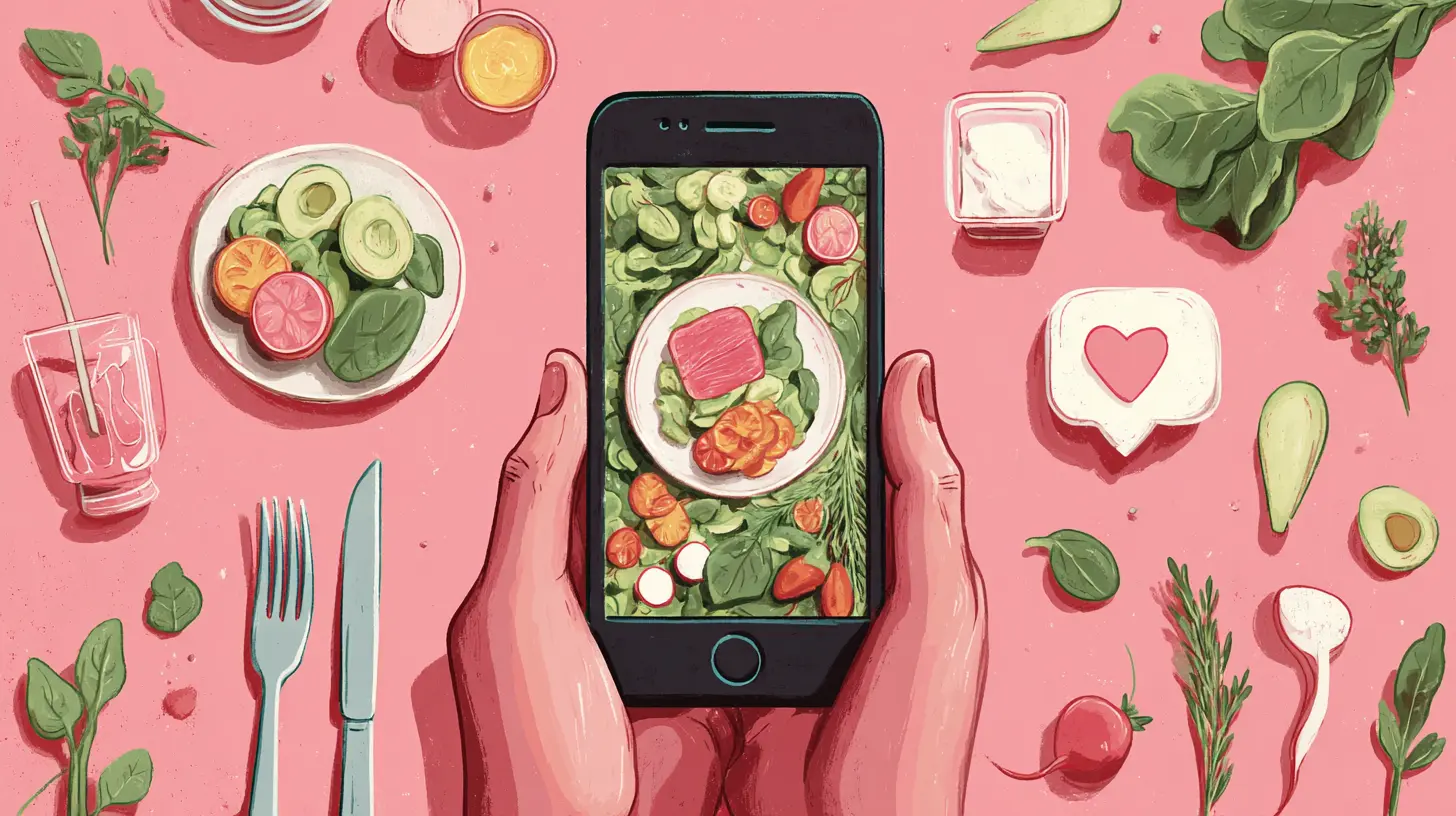
A plate of pasta sits on a restaurant table. To one diner, it looks generous. To another, it looks skimpy. Neither person is measuring anything. They are comparing what they see against an internal reference point built over years of eating. That reference point is no longer shaped only by family dinners, cultural norms, and the portions we encountered growing up. It is now shaped, in part, by a relentless stream of images and videos designed to capture attention. Social media has quietly become one of the most powerful forces recalibrating what we consider a normal amount of food.
This matters more than most people realize. Portion size is one of the strongest environmental drivers of how much we eat. When our perception of a normal portion drifts upward, intake tends to follow. When it drifts downward in unhealthy ways, restriction and disordered eating can take root. Understanding how social platforms bend that perception is the first step toward taking back control of your own plate.
Why Portion Perception Is So Malleable
Human beings are poor at judging absolute quantities of food. We are far better at judging relative quantities. This is a well-established principle in appetite research, often described through what scientists call portion size effects. If you serve someone a larger portion, they tend to eat more, often without noticing. If you serve a smaller portion in a larger bowl, they may feel less satisfied even when the actual amount is identical.This happens because satiety is not purely physiological. It is also psychological and visual. The brain uses external cues, such as plate size, bowl depth, utensil size, and the amount of food relative to its container, to estimate whether a meal is "enough." These cues operate below conscious awareness. You do not decide to feel full based on how a plate looks. Your brain simply integrates the visual information and produces a sensation of satisfaction or dissatisfaction.
Social media supercharges this process because it delivers an endless supply of visual reference points. Every scroll exposes you to someone else's meal, someone else's plate, someone else's idea of normal. Over time, those references accumulate and shift your baseline.
The Mechanisms Behind the Shift
Constant Exposure to Extreme Portions
Traditional media, such as television and magazines, also showed food. But the volume and intensity were limited. Social media is different in three specific ways.First, it is continuous. You are not exposed to a few food images per day. You may see dozens or hundreds. Second, it is personalized. Algorithms learn what holds your attention and deliver more of it. If you pause on a massive burger or a towering dessert, you will see more of the same. Third, it is social. The food is presented by people, not corporations, which makes the implicit norm feel more real and more relevant to your own life.
The result is a distorted sample. You are not seeing a representative cross-section of how people eat. You are seeing the most visually dramatic, most engaging, most shareable examples. This is a classic sampling bias, and your brain does not correct for it.
The Comparison Trap
Social comparison theory, first articulated by psychologist Leon Festinger in the 1950s, holds that people evaluate themselves by comparing against others, especially when objective standards are absent. There is no objective standard for "how much food is normal." So we look around. On social media, the people we look at are often curated, filtered, and selected for engagement rather than accuracy.Two comparisons dominate. Upward comparison happens when you see someone eating a very large portion and conclude that your own normal portion is too small. Downward comparison happens when you see someone eating a very small portion, often framed as discipline or virtue, and conclude that your own portion is excessive. Both can distort perception. Both can push behavior in unhealthy directions.
The Aesthetic of Abundance
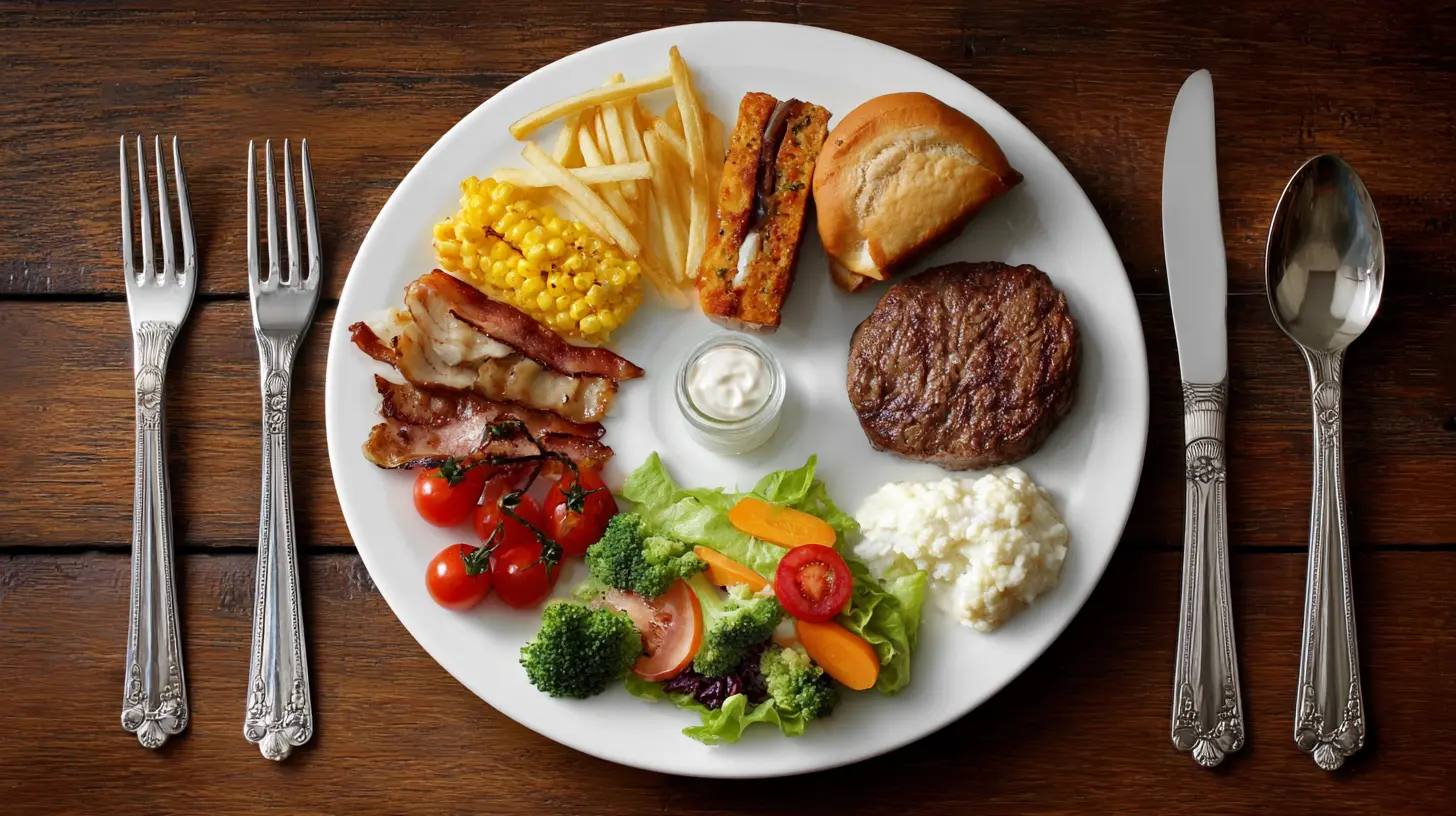
Food content that performs well tends to be visually excessive. Cheese pulls, stacked burgers, overflowing bowls, and "loaded" everything dominate feeds because they trigger curiosity and appetite. This is not an accident. It is an economic incentive. Creators who want views learn quickly that bigger, richer, and more dramatic food gets more engagement.The consequence is that abundance becomes the visual default. When your feed is saturated with oversized meals, a standard portion can start to look small by comparison. You may not consciously think "that is a huge portion." You may simply feel that your own meal is underwhelming.
The Aesthetic of Restriction
At the same time, a parallel current runs through social media. Wellness influencers, fitness accounts, and "what I eat in a day" videos often showcase very small portions, sometimes presented as ideal. These videos can normalize undereating, particularly among younger viewers. The contrast between abundance content and restriction content creates a confusing landscape. One day your feed tells you to eat more, the next it tells you to eat less. Neither message is grounded in your actual needs.
How This Changes Behavior, Not Just Perception
Perception is not a passive experience. It drives action.When your internal reference point for a normal portion shifts upward, several things tend to happen. You may serve yourself more without thinking. You may feel dissatisfied with portions that previously satisfied you. You may seek out larger sizes at restaurants or order more items. You may snack more because your sense of what constitutes a snack has expanded. Over months, these small shifts can add up to meaningful changes in total intake.
When your reference point shifts downward, the risks are different but real. You may feel anxious about normal portions. You may start skipping meals or restricting food groups. You may develop a preoccupation with food that interferes with daily life. For people with a history of disordered eating, this environment can be especially dangerous.
these effects are not universal or deterministic. Many people consume food content without any change in behavior. Individual susceptibility depends on factors such as baseline relationship with food, mental health, age, and how much time is spent on these platforms. The point is not that social media inevitably damages everyone. The point is that it creates conditions that make distortion more likely, and those conditions deserve attention.
Real-World Examples
Consider a common scenario. A person who normally eats a bowl of oatmeal with fruit for breakfast starts following several fitness accounts. Within weeks, their feed is full of smaller, more austere breakfasts: black coffee, a few egg whites, a handful of berries. The person begins to feel that their own breakfast is excessive. They reduce it. They feel hungry by mid-morning. They compensate with a larger lunch, then feel guilty, then restrict again. The cycle is not driven by physiology. It is driven by a shifted reference point.Now consider the opposite. A person who normally eats a moderate dinner starts watching "mukbang" or competitive eating content. Their feed fills with enormous platters. Over time, their own dinner looks small. They start adding extra sides, larger portions of protein, more dessert. They are not consciously trying to eat more. They are simply recalibrating to what now looks normal.
In both cases, the person's actual nutritional needs have not changed. Only their perception has.
The Role of Platform Design
It is worth being precise about what is happening here. Social media platforms are not neutral conduits. They are engineered to maximize engagement. That means they prioritize content that provokes strong reactions, including appetite, envy, aspiration, and outrage. Food content is uniquely effective because it taps into a basic biological drive.Features such as infinite scroll, autoplay, and algorithmic recommendation remove natural stopping points. You do not decide to see one more food video. The platform decides for you. This reduces the friction that might otherwise allow you to reflect on what you are seeing.
None of this is a conspiracy. It is the predictable outcome of a business model built on attention. But understanding the design helps explain why willpower alone is a weak defense. You are not competing against your own discipline. You are competing against a system optimized to hold your gaze.
Common Mistakes and Misconceptions
Mistake 1: Assuming You Are Immune
Many people believe they are not influenced by what they see because they "know it is just social media." Awareness of influence does not eliminate influence. Research on media effects consistently shows that people underestimate how much they are affected while overestimating how much others are affected. This is sometimes called the third-person effect. If you assume you are immune, you are less likely to take protective steps.Mistake 2: Treating Portion Size as a Moral Issue
Portion size is not a measure of virtue. Eating a large meal does not make you greedy. Eating a small meal does not make you disciplined. Framing food in moral terms increases shame, and shame tends to worsen eating behavior rather than improve it. A more useful frame is practical: does this portion meet my needs, and does it feel right for my body today?Mistake 3: Copying Someone Else's Plate
Influencers have different bodies, different activity levels, different metabolisms, and different goals. Copying their portions is like copying their shoe size. It may fit them perfectly and fit you poorly. Portions should be personalized, not imitated.Mistake 4: Believing There Is One Correct Portion
Portion needs vary by individual and by day. Hunger fluctuates with sleep, stress, activity, hormones, and illness. A portion that is right for you on a rest day may be too small on a training day. Rigid rules about portion size tend to break down because they ignore context.Mistake 5: Confusing Portion Size With Serving Size
A serving size is a standardized unit used for nutrition labeling. A portion is how much you actually eat. They are not the same thing, and treating a serving size as a prescription for how much you should eat is a misunderstanding. Serving sizes are reference points, not recommendations.Practical Strategies for Recalibrating
The goal is not to eliminate social media from your life. The goal is to reduce its influence on your perception of food and rebuild a reference point based on your own body and needs.Curate Your Feed Deliberately
Unfollow or mute accounts that consistently leave you feeling inadequate, anxious, or driven to restrict or overeat. This is not censorship. It is basic hygiene. You would not keep a friend who made you feel bad about every meal. Apply the same standard to your feed.Follow accounts that promote a balanced, realistic relationship with food. Look for creators who show variety, who eat for pleasure and nourishment, and who do not moralize about portions. If you cannot find them, follow fewer food accounts altogether.
Practice Portion Awareness Without Measurement
You do not need to weigh or measure everything. You need to notice. Before eating, take a moment to check in with your hunger. After eating, check in with your satisfaction. Over time, this builds an internal reference point that is more reliable than any external image.A useful technique is to plate your food, then pause for ten seconds before eating. Look at the plate. Ask yourself whether it looks like enough for your current hunger. You can always add more. Starting slightly smaller and adding is easier than starting too large and feeling obligated to finish.
Use Physical Anchors
Your own hands are a convenient and portable reference. A palm-sized portion of protein, a cupped hand of carbohydrates, a thumb of fat, a fist of vegetables. These are rough guides, not rules. They are useful because they scale with your body. A larger person has larger hands. A smaller person has smaller hands. This is a more personalized starting point than a stranger's plate on a screen.Eat Without Screens Sometimes
Eating while scrolling disconnects you from the experience of eating. You taste less, notice satiety less, and are more likely to eat past fullness. Try eating at least one meal a day without a screen. This is not about discipline. It is about giving your brain the information it needs to register what you ate.Take Periodic Breaks
If you notice that food content is affecting your mood or your eating, take a break. A week away from food-focused accounts can help reset your perception. Many people find that after a break, the content that once seemed normal now looks extreme.Seek Professional Guidance When Needed
If you find yourself preoccupied with portion size, restricting significantly, bingeing, or feeling distressed around food, consider speaking with a registered dietitian or a mental health professional. Social media may be a trigger, but it is rarely the sole cause. Professional support can help you address the underlying patterns.
When Social Media Can Actually Help
It would be dishonest to frame social media as purely harmful. There are genuine benefits.For people learning to cook, short-form video can be an effective teaching tool. Seeing a technique demonstrated is often more useful than reading about it. For people managing specific conditions, such as diabetes or celiac disease, online communities can provide practical tips and emotional support. For people in recovery from disordered eating, certain accounts offer validation and hope.
The difference lies in the nature of the content and the relationship you have with it. Educational, balanced, and non-moralizing content can support healthy eating. Content that promotes extremes, whether of abundance or restriction, tends to distort perception. The key is to be intentional about which you consume.
A Balanced View
It is tempting to conclude that social media is the villain and the solution is to log off entirely. That is neither realistic nor necessary for most people. A more nuanced view is that social media is a powerful environmental input, and like any powerful input, it deserves management.You would not drink from a fire hose. You would not stand in direct sun all day without protection. You would not let a stranger set your grocery list. Yet many people let an algorithm set their sense of what a normal meal looks like. That is the imbalance worth correcting.
The goal is not to return to some imagined pre-internet purity. It is to build a personal reference point that is grounded in your own body, your own needs, and your own values, rather than in a curated stream designed to hold your attention.
Final Thoughts
Portion perception is not fixed. It is learned, and it can be relearned. Social media has accelerated the process of learning from external cues, often in ways that do not serve us. But the same plasticity that allows distortion also allows correction.Start small. Curate your feed. Eat without a screen once a day. Notice your hunger and your satisfaction. Use your hands as a guide. Take breaks when you need them. Over time, your internal reference point will stabilize, and the images on your screen will lose some of their power.
Your plate is yours. It should reflect your life, not someone else's highlight reel.
all images in this post were generated using AI tools
Category:
Portion ControlAuthor:

Sophia Wyatt
Discussion
rate this article
2 comments
Juliet McCartney
Great insights on perception!
September 20, 2026 at 3:56 AM
Sophia Wyatt
Thank you! I'm glad you found the insights valuable.
Kismet Morales
This article really opened my eyes to how social media shapes our views on portion sizes. It's a timely reminder to be mindful and focus on our own needs.
September 15, 2026 at 3:12 AM
Sophia Wyatt
I'm glad you found the article insightful. Social media's impact on our perceptions is powerful, and being mindful is crucial. Thanks for sharing your thoughts!