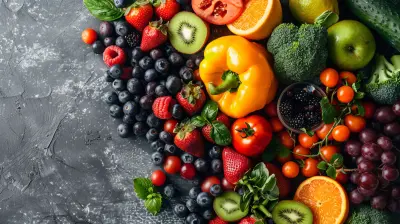
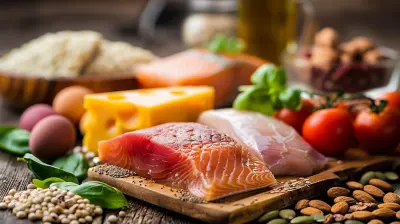
The Simple Plate Method for Balanced Meals Every Time
18 October 2026
Most people do not struggle with nutrition because they lack information. They struggle because they lack a repeatable system. Knowing that vegetables are good for you and actually getting a balanced meal onto the table on a Tuesday night after work are two very different skills. The gap between knowledge and behavior is where most eating patterns fall apart.
The Simple Plate Method closes that gap. It is a visual, flexible framework for assembling meals that cover your nutritional bases without weighing food, counting macros, or consulting an app at every meal. It works because it shifts the decision from "what should I eat" to "how should I arrange what I eat," which is a far easier question to answer consistently.
What the Simple Plate Method Actually Is
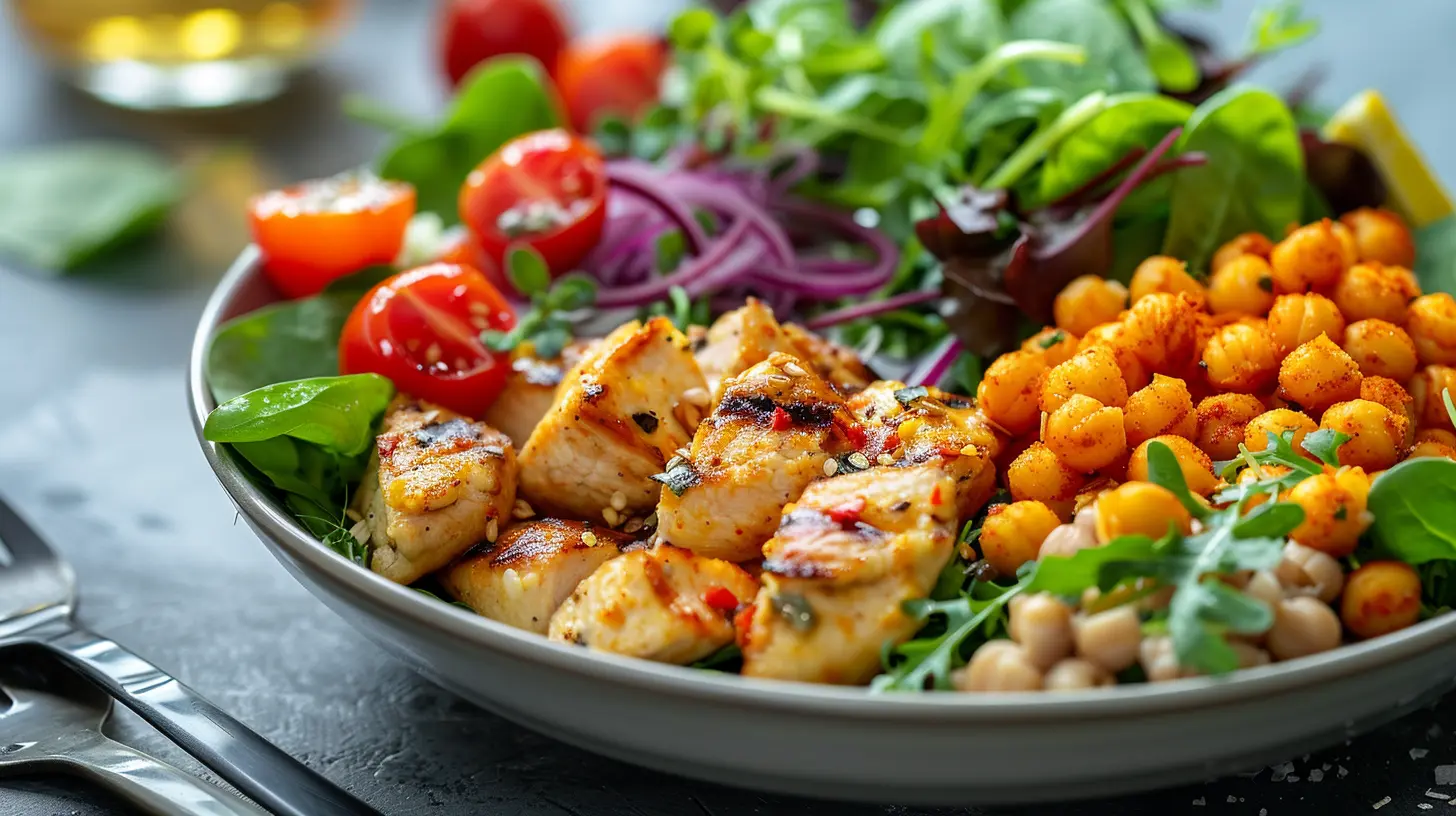
At its core, the method divides your plate into rough proportions rather than precise portions. A standard version looks like this:- Half the plate: non-starchy vegetables
- One quarter: protein-rich foods
- One quarter: carbohydrate-rich foods, ideally minimally processed
- A modest addition: fat, in the form of cooking oil, dressing, nuts, seeds, avocado, or similar
That is the entire framework. No calorie math, no gram scales. The plate itself becomes the measuring tool, and your hand and eye become the instruments.
The proportions are not arbitrary. They reflect a practical balance of fiber, protein, carbohydrate, and fat that tends to support steady energy, satiety, and reasonable calorie intake for most adults. The half-plate of vegetables delivers volume and fiber, which helps you feel full on fewer calories. The protein quarter supports muscle maintenance and adds to satiety. The carbohydrate quarter provides energy without dominating the meal. The fat makes the food taste good and helps with absorption of fat-soluble vitamins.
What makes this method genuinely useful is not the specific ratios. It is the fact that it gives you a decision structure you can apply to almost any cuisine, any budget, and any cooking skill level.
Why Proportions Beat Counting
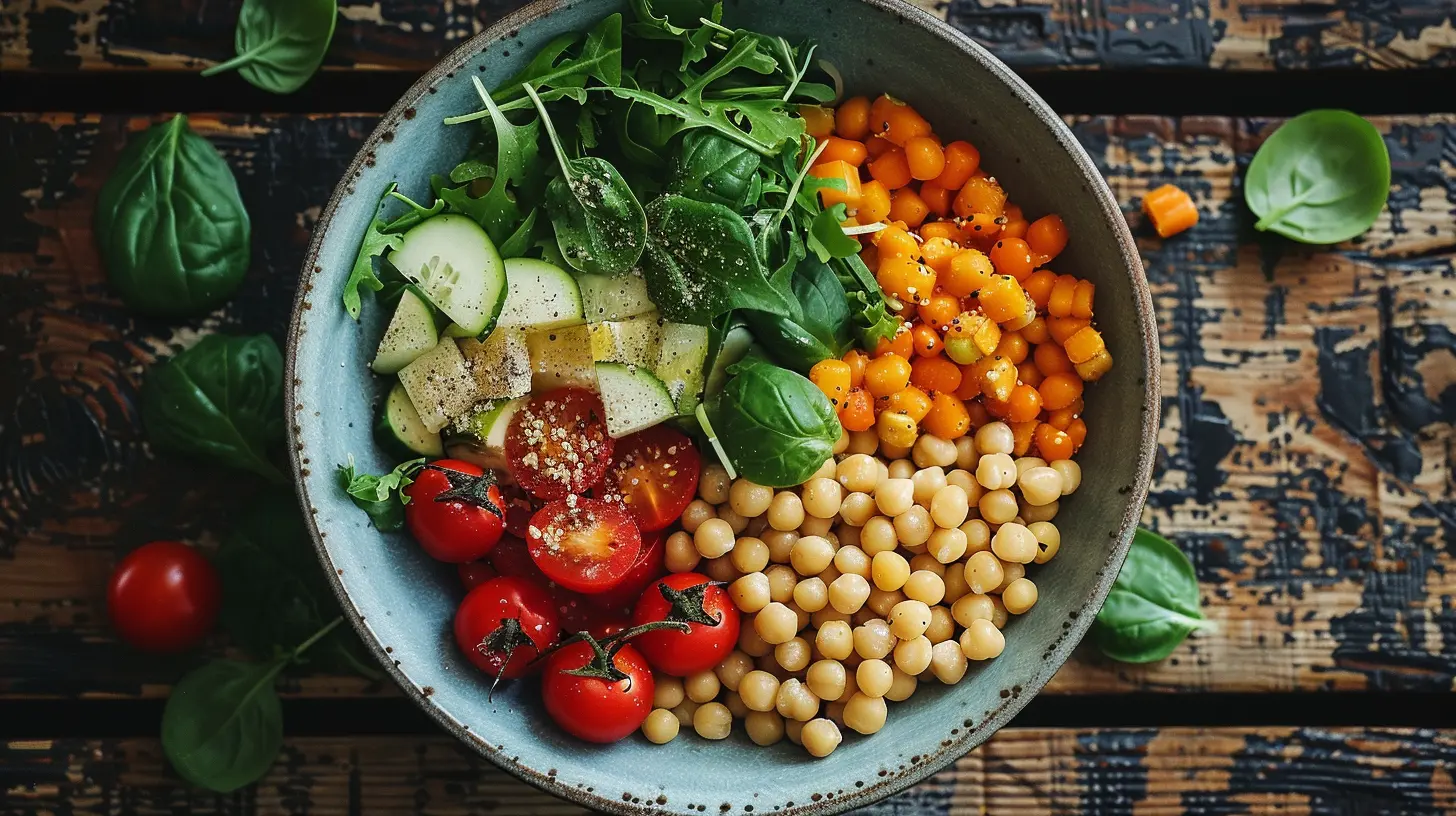
Tracking apps and macro counting work for some people, and they can be valuable for athletes or people with specific clinical needs. But they carry a hidden cost: cognitive load. Every meal becomes a data entry task. For many people, that burden is sustainable for weeks, not years. When it collapses, the structure collapses with it.The plate method trades precision for durability. It will not tell you that you ate 142 grams of protein today. It will tell you, at a glance, whether your meal is roughly balanced. That trade-off is usually worth it, because the best nutrition system is the one you can run on autopilot during a stressful week.
There is also a psychological benefit. Counting tends to make people think in terms of "allowed" and "forbidden," which can breed guilt and rigid thinking. The plate method is descriptive rather than prescriptive. A meal is not good or bad. It is balanced or unbalanced, and unbalanced meals are easy to correct at the next one. That reframing matters more than most people realize.
Vegetables: Half the Plate, and Why That Number
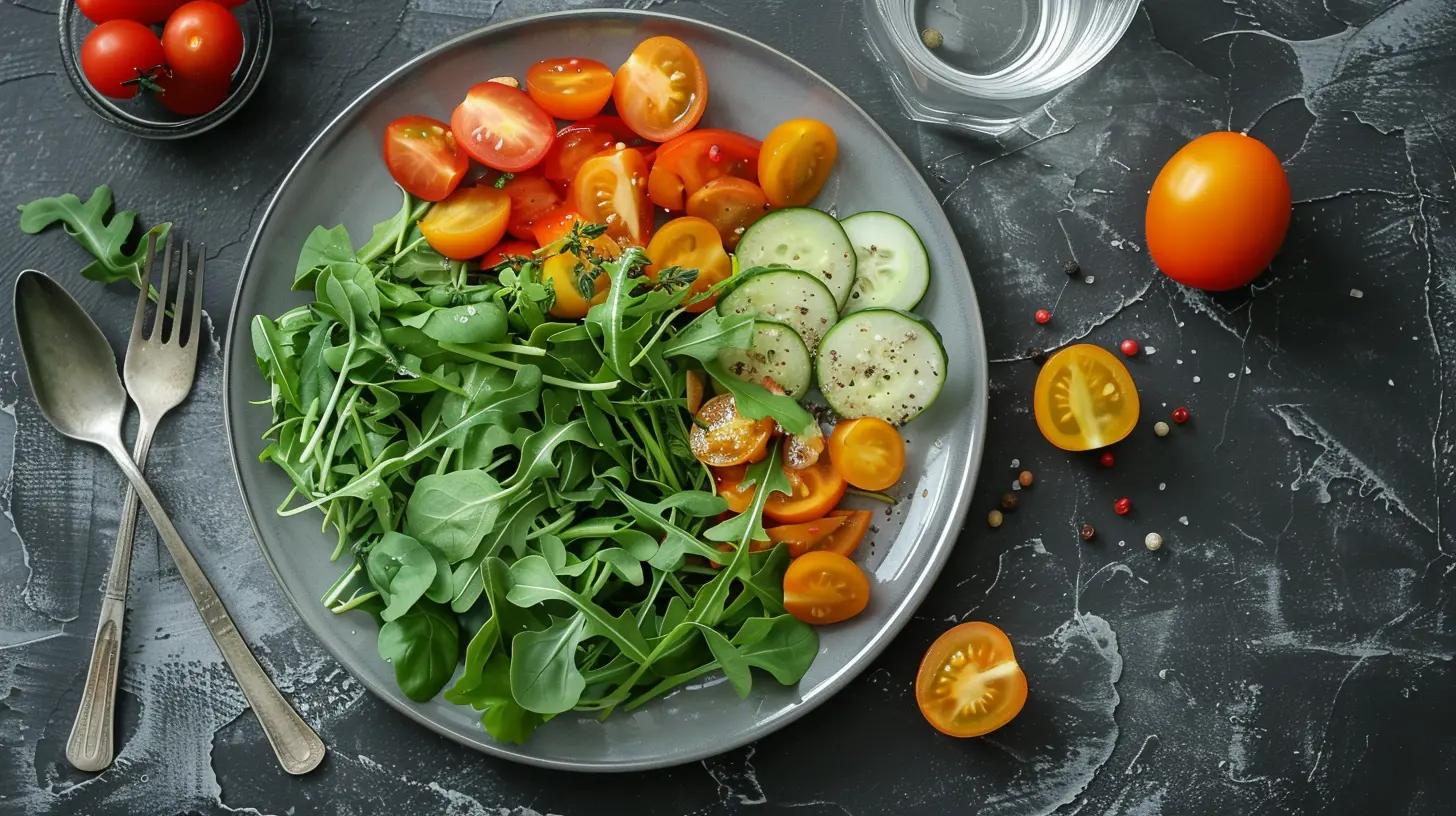
The half-plate vegetable rule is the load-bearing wall of the method. It is also the part most people quietly ignore, so it deserves a closer look.Non-starchy vegetables, things like leafy greens, broccoli, peppers, zucchini, tomatoes, cucumber, cauliflower, green beans, and mushrooms, are nutrient-dense and calorie-sparse. Filling half your plate with them does several things at once. It increases fiber, which slows digestion and supports blood sugar stability. It increases potassium and other micronutrients that most people fall short on. It adds chewing time, which gives your body a chance to register fullness. And it physically displaces space that might otherwise hold more calorie-dense food.
Starchy vegetables like potatoes, corn, and peas belong in the carbohydrate quarter, not the vegetable half. This is a common point of confusion. A plate of mashed potatoes and corn is not a half-plate of vegetables, even though both are plants.
Practical note: raw and cooked vegetables both count. Frozen vegetables count. Bagged salad counts. The method does not care about culinary ambition. A handful of cherry tomatoes and some cucumber slices next to your eggs is a legitimate way to hit the target.
Protein: The Quarter That Anchors the Meal
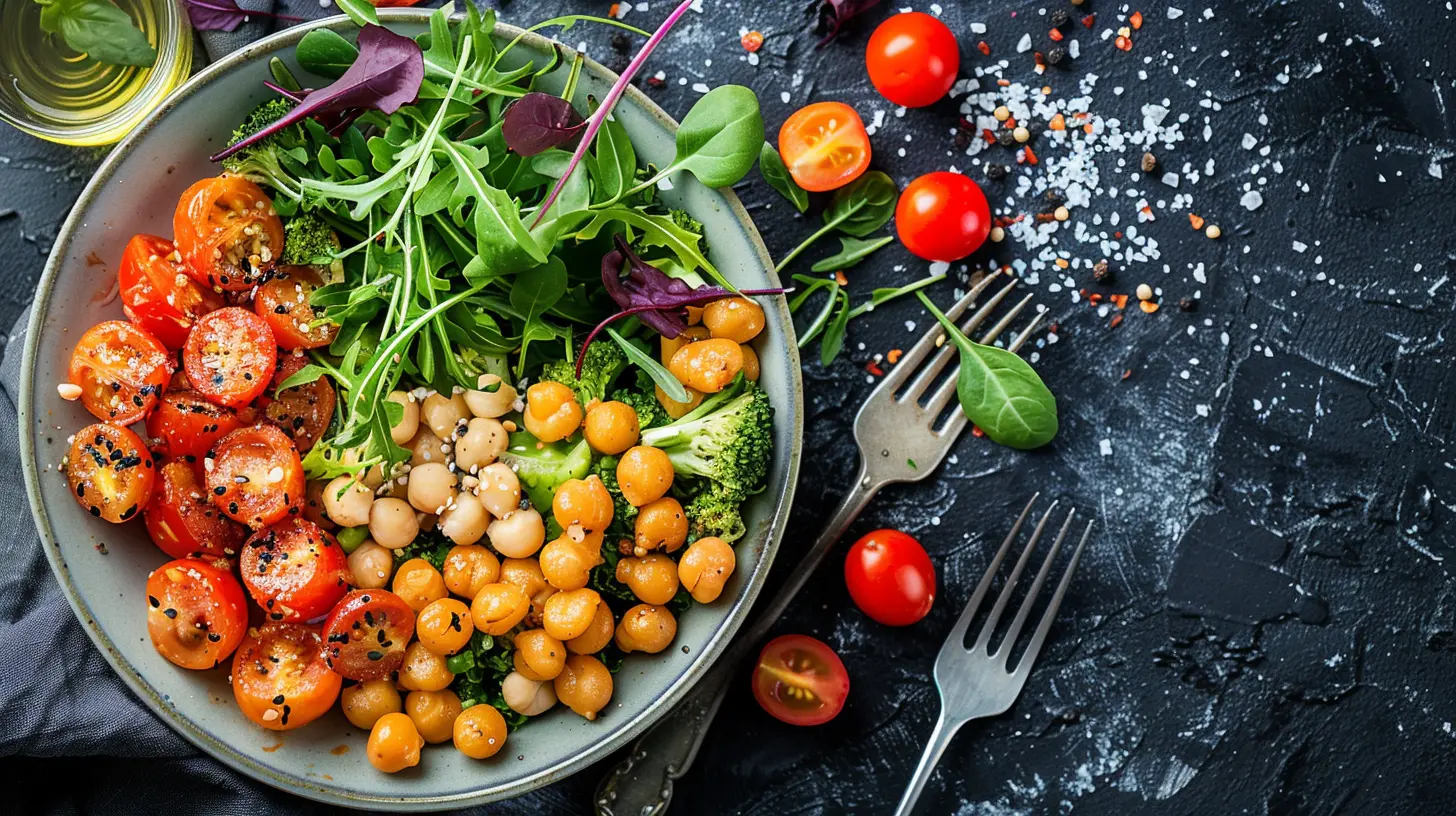
Protein is the component most people under-eat at breakfast and lunch, then over-eat at dinner. The quarter-plate rule spreads it more evenly, which tends to help with appetite control throughout the day.The size of the protein portion is roughly the size of your palm, though this varies with body size, activity level, and goals. People who are highly active, older adults concerned about muscle mass, and anyone recovering from illness may benefit from a slightly larger portion. People with kidney conditions that require protein restriction should follow medical guidance instead of a general template.
Good protein sources include poultry, fish, eggs, Greek yogurt, cottage cheese, tofu, tempeh, lentils, beans, and, in smaller amounts, nuts and seeds. Plant proteins often double as carbohydrate sources, which complicates the quarter rule slightly. If your protein is beans or lentils, they occupy part of both the protein and carbohydrate sections. That is fine. The method is a guide, not a legal code.
One nuance worth stating plainly: protein quality and source both matter, but the plate method does not police them. A grilled chicken breast and a processed chicken nugget both fill the protein quarter, but they are not nutritional equivalents. The method handles structure. You still have to make reasonable choices within each section.
Carbohydrates: The Quarter People Misunderstand
Carbohydrates have been alternately villainized and glorified for decades. The plate method takes a calmer position: carbohydrates are a normal part of a balanced meal, and the issue is usually quantity and processing, not the category itself.The quarter-plate rule naturally limits carbohydrate volume without eliminating it. That suits most people well. Sources like rice, quinoa, oats, whole grain bread, pasta, potatoes, sweet potatoes, and fruit all fit here. Whole and minimally processed options tend to be better choices because they bring fiber, vitamins, and slower digestion along with the energy.
For active people, the carbohydrate quarter may feel too small. Endurance athletes and people with physically demanding jobs often do better with a larger carbohydrate portion, especially around training. For people with insulin resistance or type 2 diabetes, the quarter may need to be smaller and the vegetable half larger, with attention to which carbohydrates are chosen. This is exactly the kind of adjustment the method invites. The template is a starting point, not a fixed law.
Fat: The Small Addition That Makes Everything Work
Fat is where a lot of well-intentioned meals go wrong, not because fat is bad, but because it is easy to add unconsciously. A generous pour of olive oil, a heavy hand with cheese, and a creamy dressing can add several hundred calories without changing the plate's appearance at all.The method treats fat as a flavor and function layer rather than a section. A tablespoon of oil for cooking, a light dressing, a sprinkle of nuts or seeds, or a few slices of avocado is usually enough. Fat carries flavor, supports satiety, and helps you absorb fat-soluble vitamins from all those vegetables. It is not the enemy. It is just easy to overdo when you are not looking.
Building a Plate in Real Life: Three Examples
Abstract rules become useful only when you see them applied. Consider three ordinary meals.Breakfast. Two scrambled eggs, a large handful of spinach wilted in the pan, half a bell pepper sliced, one slice of whole grain toast, and a small amount of butter or avocado. The vegetables take up roughly half the visual space, eggs cover the protein quarter, toast covers the carbohydrate quarter, and the fat is modest. Total prep time: under ten minutes.
Lunch. A bowl with a base of mixed greens and shredded cabbage, a palm-sized portion of leftover chicken or chickpeas, a scoop of quinoa, cherry tomatoes, cucumber, and a simple olive oil and lemon dressing. This is the plate method in bowl form, which is often more practical for work lunches.
Dinner. A piece of baked salmon, a large portion of roasted broccoli and cauliflower, a baked potato, and a small pat of butter. Simple, familiar, and balanced without any measuring.
Notice that none of these meals required special products or a meal plan subscription. The method works with what people already eat. That is a large part of its appeal.
Common Mistakes and Misconceptions
Mistake one: treating the plate as a license for portion size. The method balances proportions, not total volume. A very large plate filled correctly is still a very large meal. If weight management is a goal, plate size and total servings still matter. Using a standard dinner plate rather than a platter is a quiet but effective safeguard.Mistake two: counting starchy vegetables as vegetables. As mentioned, potatoes, corn, and peas belong in the carbohydrate quarter. Piling half the plate with them defeats the purpose.
Mistake three: ignoring what happens between meals. A balanced plate at lunch does not cancel out a day of grazing on snacks. The method is a meal framework, and snacks still count toward the overall picture.
Mistake four: applying it rigidly to mixed dishes. Casseroles, curries, stir-fries, and soups do not divide neatly into quarters. For these, the practical approach is to think in terms of components rather than plate geography. Did the dish include a substantial vegetable component, a protein, and a carbohydrate in reasonable proportion? If yes, it fits the spirit of the method.
Mistake five: assuming balanced means bland. Nothing about the method requires plain food. Herbs, spices, citrus, vinegar, garlic, and moderate amounts of flavorful fats are all compatible with balanced eating. Enjoyment is not a compromise. It is a requirement for consistency.
Misconception: the method is only for weight loss. It is used that way often, but it is equally a framework for general health, sports nutrition, and family meals. The proportions can be adjusted for different goals, which is precisely what makes it adaptable.
When the Plate Method Works Best, and When It Does Not
The method fits best in a few specific situations. People who cook at home regularly, even simply, get the most from it. People who eat out frequently can still use it by mentally dividing restaurant plates, though restaurant portions and hidden fats make it less precise. Families benefit because it gives children and adults a shared visual language for meals without lectures. And anyone who has bounced off tracking apps will likely find the plate method more sustainable.It fits less well in a few others. People with clinical dietary needs, such as those managing kidney disease, diabetes with specific carbohydrate targets, or food allergies requiring careful nutrient monitoring, should treat the plate method as a general guide and follow individualized professional advice. Athletes with high energy needs may find the standard proportions too conservative and should adjust. And people who genuinely enjoy detailed tracking, and stick with it, do not need to switch.
There is no single correct system. The plate method earns its place because it is simple enough to survive busy weeks and flexible enough to accommodate different foods, cultures, and goals.
Making It Stick: Practical Advice
Start with one meal per day. Most people find dinner easiest to restructure, then breakfast. Trying to overhaul every meal at once tends to produce a short burst of effort followed by a return to old habits.Prep vegetables in advance so the half-plate rule is easy to meet. Washed greens, cut peppers, and roasted trays of vegetables reduce the friction that leads to skipped vegetables. Convenience is not a compromise here. It is strategy.
Use visual cues rather than measurements. Look at your plate before you eat. Does half of it look like plants? If not, adjust. This takes seconds and becomes automatic within a few weeks.
Expect imperfection. Some meals will be unbalanced. The method is designed for the next meal, not for guilt about the last one. Consistency over weeks matters far more than precision at any single sitting.
The Simple Plate Method is not a diet. It is a decision tool, and like any good tool, its value comes from use. Give it a few weeks of ordinary, imperfect practice, and it will do what most nutrition advice fails to do: quietly change how you eat without requiring you to think about it constantly.
all images in this post were generated using AI tools
Category:
Portion ControlAuthor:

Sophia Wyatt