The Digital Detox: How to Unplug and Reclaim Your Attention in 2027
3 September 2026
Let's be brutally honest for a second. You are not addicted to your phone. You are addicted to the endless loop of novelty, validation, and mild anxiety that your phone delivers with surgical precision. By 2027, we have stopped pretending that "screen time" is a personal failing and started recognizing it as a designed environment. The apps are not tools; they are slot machines dressed in minimalist icons. And you, my friend, are the house's favorite customer.
But here is the twist. The solution is not to throw your device into the ocean or move to a cabin with a goat. That is performative nonsense. The real game in 2027 is not about quitting technology. It is about renegotiating the terms of engagement so that your attention serves your goals, not their metrics. This is the digital detox, version 2.0. It is less about deprivation and more about architectural defiance. You are going to build a fence around your mind, and you are going to like it.

The Myth of the "Addicted Brain" (And What Is Actually Happening)
Every other article you read will tell you that dopamine is the enemy. They will talk about "dopamine detoxes" as if you can flush your neurochemistry like a clogged pipe. That is not how biology works. Dopamine is not a poison; it is a prediction molecule. It spikes not when you receive a reward, but when you anticipate one. That is why you check your phone forty times an hour even when you know there is nothing new. The anticipation is the drug. The notification is just the excuse.In 2027, the problem is not that you are weak. The problem is that your attention is being harvested by systems that have spent billions of dollars studying the precise millisecond where your thumb hesitates. They have optimized for your "lizard brain" because it is predictable. The detox, therefore, is not about lowering your dopamine baseline. It is about interrupting the prediction loop. You need to make your behavior unpredictable to the algorithm. That is the only way to break the cycle.
The first step is to stop calling it an addiction. Calling it an addiction implies you need treatment, which implies you are powerless. You are not powerless. You are outmatched in a rigged game. The fix is to change the game, not to blame your willpower.
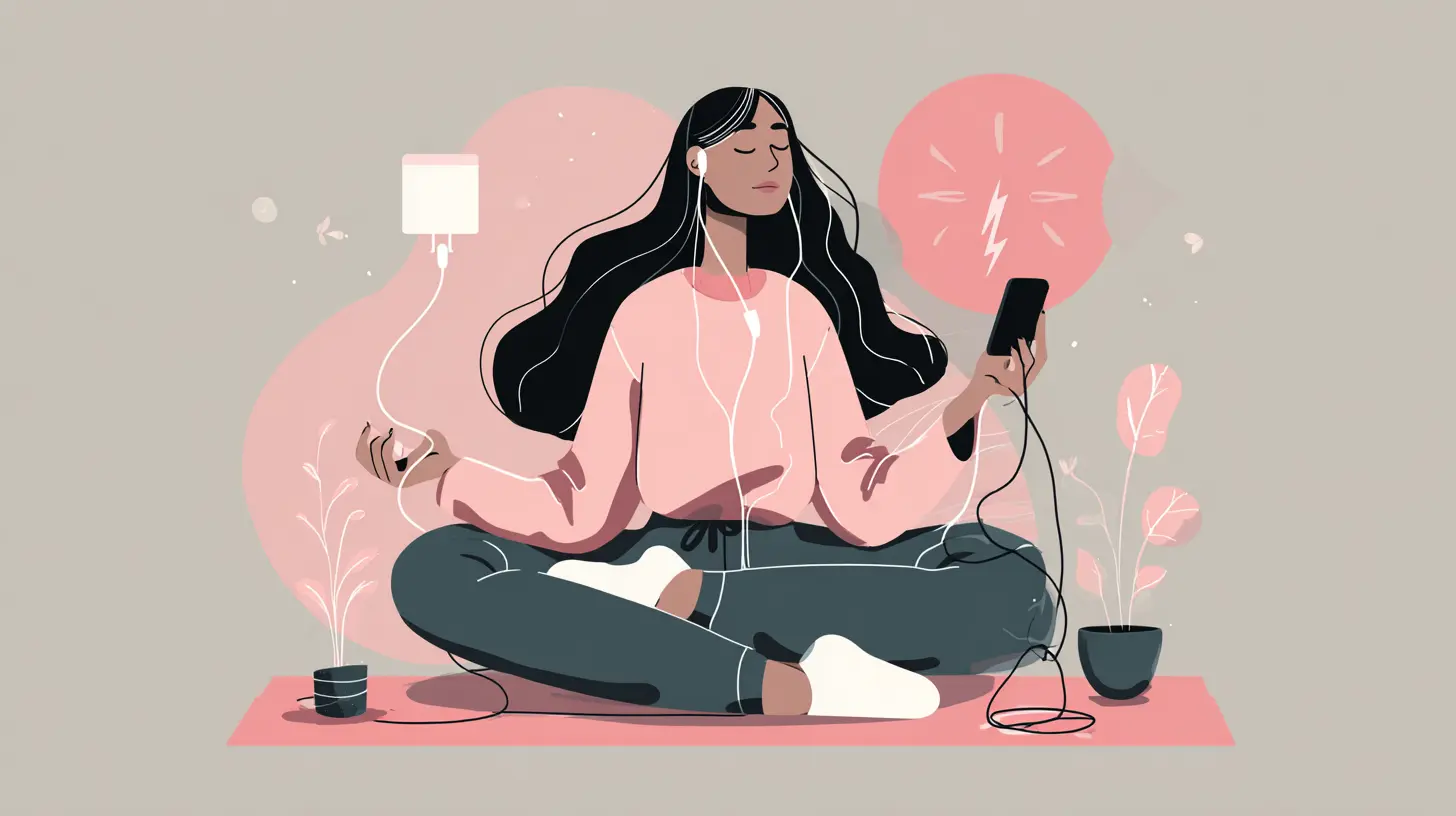
Why "Just Put Your Phone Away" Fails Spectacularly
The most common advice is also the most useless. "Just put your phone in another room." "Turn off notifications." "Use grayscale mode." These are band-aids on a hemorrhage. Why? Because they rely on your prefrontal cortex, the rational part of your brain, to constantly fight your limbic system, the emotional part. That fight is exhausting, and you will lose it by 3 PM on a Tuesday.Here is the hard truth: you do not have a willpower problem. You have a design problem. Your environment is hostile to focus. So, the detox must be environmental, not behavioral. You cannot outsmart a system that is designed to be smarter than you. You have to physically remove yourself from the system's reach, or you have to change the system's inputs.
The "other room" trick fails because your brain knows where the phone is. It creates a low-level background anxiety that you are missing something. This is called "phantom vibration syndrome," and it is a real phenomenon. The solution is not distance; it is friction. You need to make the action of checking your phone so annoying, so slow, and so unrewarding that your brain decides it is not worth the effort.

The 2027 Toolkit: Friction, Not Abstinence
Let's talk about what actually works in the current landscape. The goal is not to eliminate screen time. That is unrealistic and, frankly, unnecessary. The goal is to eliminate "zombie time" - those hours where you are scrolling without intention, absorbing nothing, and feeling worse afterward.The Two-Second Rule and the Ten-Minute Rule
The first tool is the "two-second rule." If you want to check your phone, you must first state out loud what you are looking for. "I am opening Instagram to see if Sarah replied." If you cannot articulate a specific purpose, you do not unlock the phone. This sounds silly, but it forces your brain to move from autopilot to conscious action. It inserts a speed bump into the habit loop.The second tool is the "ten-minute rule." When you feel the urge to check a social media app or news site, you set a timer for ten minutes. You are not forbidding the action; you are delaying it. In those ten minutes, you do something physical - stretch, drink water, stare out a window. What you will find is that the urge peaks and then crashes. The anticipation fades because you have broken the prediction loop. The app no longer promises relief; it promises a delayed chore.
The Nuclear Option: The "Dumb" Phone or the App Blocker
For the truly serious, there is the hardware solution. In 2027, there is a thriving market for minimalist phones that do calls, texts, maps, and music. They have e-ink screens and batteries that last a week. They are not cool. They are not fun. They are freedom.But before you buy one, consider the trade-off. A dumb phone solves the distraction problem but creates a logistics problem. You lose mobile payments, two-factor authentication, and the ability to look up a restaurant menu on the fly. For many professionals, this is a non-starter. The better option might be a "dumbed-down" smartphone. You keep the hardware, but you strip the software.
This means deleting the browsers, the app stores, and the social media clients. You keep only the tools you need for work and essential communication. Then, you use a third-party app blocker that requires a physical action to bypass - like scanning a QR code you keep in your car. This creates a "cooling off" period. You can still get to the app if you truly need it, but you have to work for it. That work is usually enough to stop the impulse.

The Attention Economy Is a War. Stop Fighting on Their Terms.
Here is a concept that most detox guides miss: you cannot reclaim your attention by using attention-based tools. If you are using a "focus app" that sends you a notification to tell you to stop looking at notifications, you are still in the machine. The goal is to become boring to the algorithm.The algorithm thrives on emotional volatility. It wants you angry, anxious, or envious because those emotions drive engagement. The detox is about cultivating emotional flatness when it comes to digital content. You need to become a boring user. Do not comment on controversial posts. Do not engage with outrage bait. Do not "react" to anything with a strong emotion. The algorithm will eventually categorize you as low-value and show you less garbage. This is not a technical hack; it is a behavioral strategy. You are training the machine to ignore you.
The "Feed Famine" Strategy
One of the most effective techniques I have seen is the "feed famine." For a period of thirty days, you do not consume any algorithmic feeds. That means no "For You" pages, no "Discover" tabs, no "Trending" sections. You only consume content that you have actively sought out. You type in the URL of a specific news site. You open a specific newsletter. You search for a specific topic on a search engine.This is painful for the first week. You will feel a profound sense of loss, like you are missing out on the cultural conversation. But what you are actually missing is the illusion of participation. The algorithmic feed is designed to make you feel like you are part of a massive, real-time conversation. You are not. You are watching a curated stream of content selected to keep you watching. When you cut the feed, you realize that 90% of what you were consuming was noise that you will not remember in a month.
The Physical Reset: Sleep, Sunlight, and the "Boredom Muscle"
You cannot digitally detox if your biology is out of whack. The most powerful attention tool you have is not an app; it is your circadian rhythm. In 2027, we have overwhelming evidence that light exposure is the master switch for attention.The Morning Protocol
For the first thirty minutes after waking, do not look at a screen. This is non-negotiable. Your brain transitions from sleep to wakefulness via a cascade of hormones. When you immediately look at a bright screen, you flood your system with cortisol and disrupt the natural rise in dopamine. This makes you anxious and scattered for the rest of the day. Instead, get outside. Even if it is cloudy, the outdoor light is hundreds of times brighter than your indoor lighting. This sets your circadian clock for alertness in the morning and, crucially, for melatonin production at night.The Afternoon Slump Is a Signal, Not a Bug
When you hit the 2 PM slump, your instinct is to reach for caffeine and a screen. That is a mistake. The slump is often a sign of mental fatigue, not physical exhaustion. The best reset is not a digital one; it is a physical one. A ten-minute walk, some light stretching, or even just standing up and looking at a distant object for two minutes will do more for your focus than another cup of coffee.This is where the "boredom muscle" comes in. You need to practice being bored. Not "I have nothing to do" boredom, but "I am not going to fill this empty moment with a screen" boredom. Stand in a line without checking your phone. Wait for the kettle to boil without looking at a screen. Sit on a bus and just look out the window. This is not wasted time. This is the time when your brain consolidates memories, generates creative ideas, and solves problems in the background. If you fill every gap with content, you are starving your brain of its most productive state.
The Social Contract: How to Detox Without Losing Your Friends
One of the biggest fears about a digital detox is social isolation. We have conflated constant availability with friendship. If you do not reply to a text within an hour, people think you are angry. If you do not like a post, they think you are judging them. This is a social contract that we have signed without reading the fine print.You need to renegotiate that contract. This requires explicit communication. Tell your closest friends and family that you are instituting a "response window." You check messages at 10 AM, 2 PM, and 6 PM. Outside those windows, you are unreachable. You are not ignoring them; you are prioritizing your attention.
Here is the uncomfortable truth: most messages are not urgent. They are conversational filler. By responding in batches, you actually become a better communicator because you give each message your full attention for a few minutes rather than a distracted half-second.
The "Call Me If It Matters" Rule
For emergencies, you need a protocol. The rule is simple: if it is truly urgent, call. If you call and I do not answer, leave a voicemail. I will call back within fifteen minutes. If you send a text saying "call me," I will see it at my next response window. This might sound rigid, but it is actually liberating. It removes the ambiguity of "seen" receipts and the anxiety of waiting for a reply. You are setting a clear boundary that protects your mental space while still being available for genuine crises.The Comparison Trap and the "Highlight Reel" Fallacy
A significant portion of your digital stress comes from social comparison. You see your friend's vacation photos, your colleague's promotion announcement, and your cousin's perfect family dinner. You feel inadequate. You feel like you are falling behind.But you are comparing your behind-the-scenes footage to their highlight reel. You are comparing your blooper reel to their trailer. This is not a fair comparison, and it is not a useful one. The detox is not just about reducing screen time; it is about changing the narrative you tell yourself about what you see.
The "Curated Unfollow"
Take a hard look at your follow list. If an account makes you feel bad about yourself, your body, your career, or your life, unfollow it. Do not be polite. Do not worry about hurting their feelings. They will not know. The algorithm might still show you their content if they are shared by others, but you can actively select "not interested" on those posts.The goal is to curate a feed that is either useful, inspiring, or genuinely entertaining. If it is not one of those three things, it is noise. You have to be ruthless. You are not being mean; you are protecting your mental health. This is the digital equivalent of cleaning out your closet. You are removing the clothes that do not fit and make you feel bad, so you can actually see the ones that look good.
The Deep Work Schedule: Protecting Your Cognitive Peak
We all have a time of day when our brain is sharpest. For most people, it is in the morning, two to four hours after waking. This is your "deep work" window. This is when you should do your most cognitively demanding tasks - writing, coding, strategic planning, complex problem-solving.The detox requires that you protect this window fiercely. No meetings. No emails. No social media. No phone calls. You treat this time like a surgical procedure. You are unavailable.
The problem is that most people waste this golden window on reactive tasks. They check email first thing, which puts them in a defensive, reactive mode. By the time they get to their real work, they are already tired and distracted. The fix is to invert your day. Do your deep work first. Then, and only then, do you open the communication channels.
The "Shutdown Ritual"
At the end of your workday, you need a shutdown ritual. This is a five-minute process where you write down all the loose ends, all the tasks you need to do tomorrow, and all the worries that are bouncing around your head. You get them out of your brain and onto paper. Then, you say to yourself, "Shutdown complete." This signals to your brain that it is safe to stop thinking about work. Without this ritual, your brain will keep churning through your to-do list while you are trying to relax, which leads to a state of "always on" that is detrimental to both focus and sleep.The Truth About Multitasking: You Are Not a Computer
In 2027, we should have finally killed the myth of multitasking. You cannot multitask. You can only task-switch rapidly. And every time you switch, you pay a "switching cost" - a fraction of a second where your brain has to reorient itself. This cost adds up. Studies have shown that it can take up to twenty-three minutes to fully regain your focus after a distraction. So, when you check your phone for thirty seconds during a work task, you are not losing thirty seconds. You are losing twenty-three minutes of productive time.This is the most compelling argument for the detox. It is not about saving time in the moment; it is about saving your cognitive capacity. When you stop switching, you enter a state of "flow" where time seems to disappear and your output quality skyrockets. This is not a mystical state; it is a biological one. Your brain is using its default mode network, which is responsible for creativity and problem-solving.
The Long Game: Attention as a Life Skill
The digital detox is not a one-time event. It is a continuous practice. You will have relapses. You will download an app, get hooked, and have to delete it again. That is fine. The goal is not perfection; it is awareness.Think of your attention as a muscle. You cannot go to the gym once and expect to be fit. You have to train it consistently. The detox is your workout routine. Some days you will do a light session; other days you will do a heavy lift. The key is to keep showing up.
By 2027, the most valuable skill you can possess is not coding or data analysis. It is the ability to focus for extended periods without external stimulation. In a world of constant distraction, the person who can sit with a complex problem for three hours without checking their phone is a unicorn. They are rare, they are valuable, and they are the ones who produce the most original work.
You can be that person. But you have to stop scrolling and start building. The digital detox is not about rejecting the future. It is about ensuring you have a place in it that is not just as a consumer of other people's content. It is about reclaiming your agency. So, put the phone down. Not forever. Just for now. And see what comes back to you.
all images in this post were generated using AI tools
Category:
Self CareAuthor:

Sophia Wyatt
Discussion
rate this article
1 comments
Pierce Stewart
Taking a break from screens can transform your focus and joy.
September 18, 2026 at 2:37 PM