How to Use Visual Cues to Master Portion Control
18 September 2026
Portion control fails for most people not because they lack discipline, but because they lack reliable feedback. A plate of pasta looks reasonable until you realize it holds three servings. A handful of nuts seems harmless until you measure it and find 400 calories. The problem is perceptual. Human beings are notoriously bad at estimating volume, weight, and energy density by eye alone. Visual cues close that gap. They give you an external reference system that compensates for the brain's built-in biases, and they do it without requiring a food scale at every meal.
This article explains how visual cues work, which ones have real utility, when they break down, and how to build a personal system you can actually sustain.
Why Your Eyes Deceive You at Meals
Before trusting any visual strategy, you need to understand why unaided estimation fails so consistently.The Delboeuf Illusion and Plate Size
The Delboeuf illusion is a classic optical phenomenon in which a circle appears larger when surrounded by a smaller ring and smaller when surrounded by a larger one. Researchers have applied this to food: the same portion of food looks more substantial on a small plate and scant on a large one. This is not a matter of opinion. It is a measurable perceptual distortion.The practical consequence is straightforward. If you serve a normal portion on a 12-inch dinner plate, your brain registers it as insufficient, and you are likely to add more. Serve the same portion on a 9-inch plate, and it registers as a full meal. The food has not changed. Your perception has.
The Unit Bias
Unit bias describes the tendency to treat whatever is presented as a single unit as the appropriate amount to consume. One bottle, one bag, one plate, one slice. When packaging or plating defines the unit, people rarely stop halfway. This is why a family-size bag of chips disappears faster than three small bags containing the same total volume.Visual cues can work with unit bias or against it. A pre-portioned container uses unit bias to your advantage. An open sharing bag uses it against you.
Surface Area and Height
People consistently underestimate calories in tall, narrow glasses and overestimate them in short, wide ones. The reverse is often true for food: a flattened, spread-out portion looks larger than a compact pile of the same weight. This means the shape of your serving vessel and the way you arrange food both influence how satisfying a meal feels.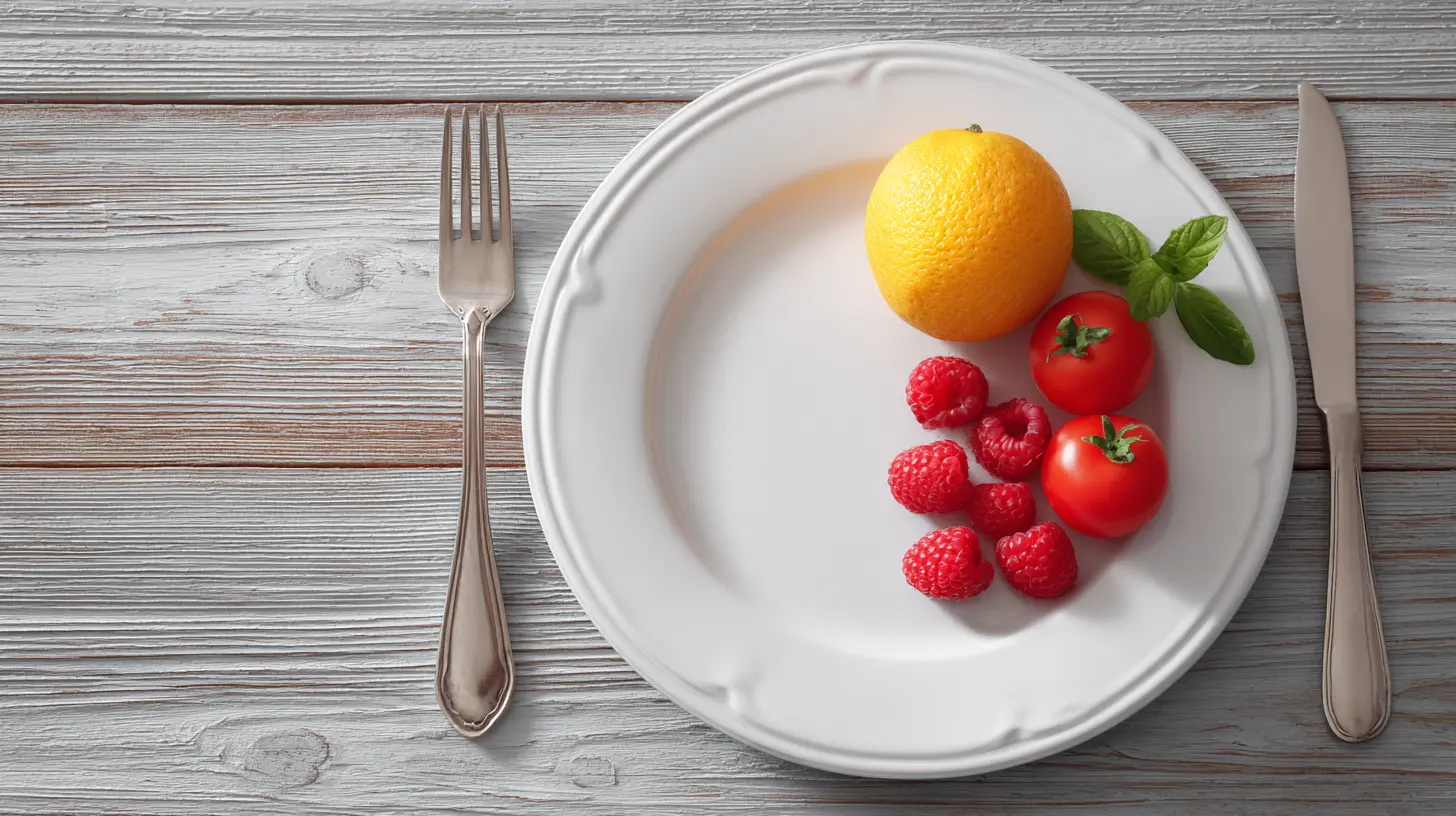
The Core Visual Cue Categories
Visual cues fall into several distinct categories, each with different strengths and failure modes. Treating them as interchangeable is a mistake.1. Hand-Based References
Your hand travels with you and scales roughly with your body size. Common references include:- Palm: approximately 3 to 4 ounces of cooked protein
- Fist: roughly 1 cup of vegetables, fruit, or grains
- Cupped hand: about 1 to 2 ounces of nuts or dried fruit
- Thumb: approximately 1 tablespoon of fats, nut butters, or oils
- Thumb tip: about 1 teaspoon
These are approximations, not measurements. A large man's palm may hold 6 ounces of chicken. A small woman's fist may be closer to three-quarters of a cup. The value of hand references is portability and consistency, not precision.
When to use them: Restaurants, travel, social events, and any situation where you cannot control the plate or measuring tools.
When not to rely on them: Clinical calorie targets, medical nutrition therapy, or body composition phases where a 20 percent error matters.
2. Plate and Bowl Geometry
The size, color, and shape of your dishware acts as a constant environmental cue.- Smaller plates reduce served portions for most people.
- Contrast matters: food that contrasts with the plate color is easier to see and portion accurately. Low contrast, such as white pasta on a white plate, tends to increase served portions.
- Rimmed plates with a visible border can act as a boundary marker.
- Bowls are riskier than plates because volume is harder to judge. A wide, shallow bowl is generally safer than a tall, narrow one.
3. Pre-Portioned Containers
Containers with built-in divisions, such as bento-style lunch boxes, create physical boundaries. You cannot overfill a compartment without it overflowing, which provides immediate visual feedback. This is one of the most reliable cue systems because it removes the decision from the moment of eating.4. The Plate Method
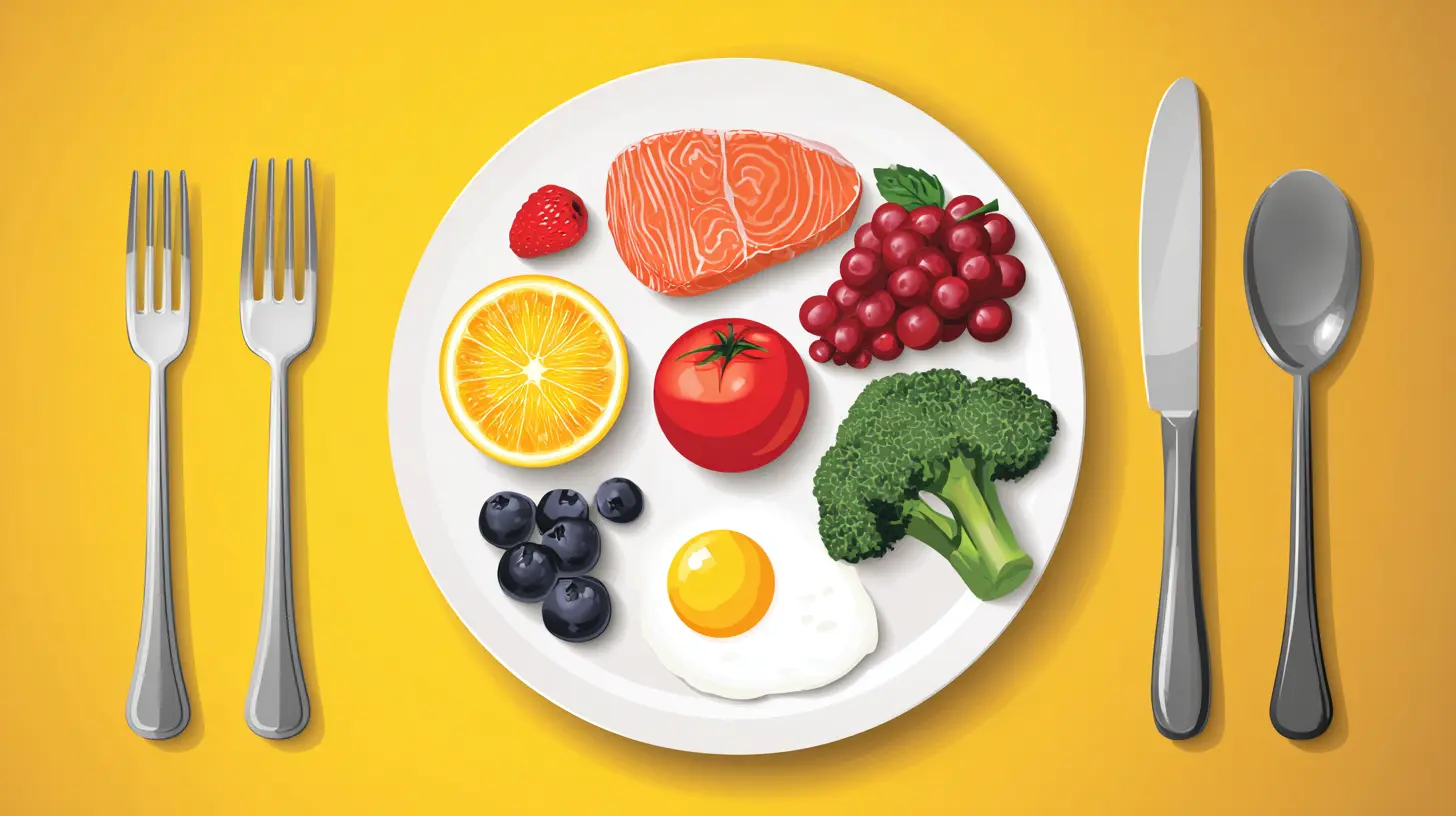
The plate method divides a 9-inch plate into three zones:- Half the plate: non-starchy vegetables
- One quarter: lean protein
- One quarter: starch or whole grains
This is a visual proportion system rather than a measurement system. It works because it controls the ratio of low-calorie-density foods to high-calorie-density foods. Vegetables fill volume with relatively few calories, so a half-plate of them displaces more energy-dense items without leaving you hungry.
5. Food Volume and Energy Density Cues
Some foods are visually deceptive. A small square of cheese, a tablespoon of oil, or a piece of dark chocolate carries far more calories per bite than a large bowl of salad. Visual cues must account for energy density, or they will mislead you.A useful mental model: categorize foods into low, medium, and high density. Low-density foods like broth-based soups, leafy greens, and berries can be eaten in large volumes. High-density foods like oils, nuts, cheese, and dried fruit need small vessels, small utensils, or pre-measured portions.
Building a Personal Visual System
A cue only works if it fits your life. Here is a practical sequence for constructing one.Step 1: Audit Your Current Portions
For three to five days, serve yourself as you normally would, then measure the result with a scale or measuring cups. Do not change your behavior during this period. The goal is to identify where your perception diverges from reality.Most people find two or three specific problem areas: rice, pasta, nut butters, cooking oils, cheese, or snacks. You do not need to fix everything. You need to fix the items that are consistently off by a wide margin.
Step 2: Choose Cues That Match the Problem
- If you over-serve starches, switch to a smaller plate and use the quarter-plate zone.- If you over-serve fats, use a measuring spoon and never pour directly from the bottle.
- If you graze from packages, pre-portion into small bowls or containers.
- If you under-serve vegetables, make them the largest visual element on the plate.
Step 3: Standardize Your Tools
Keep one plate size for main meals. Keep one bowl size for soups and cereals. Keep one set of measuring spoons accessible. Consistency reduces decision fatigue and makes the cue automatic over time.Step 4: Test and Adjust
Visual cues are hypotheses. If you use the plate method and remain hungry an hour later, the issue may be insufficient protein or fiber, not portion size. If you feel overly full, you may be overcorrecting. Adjust one variable at a time.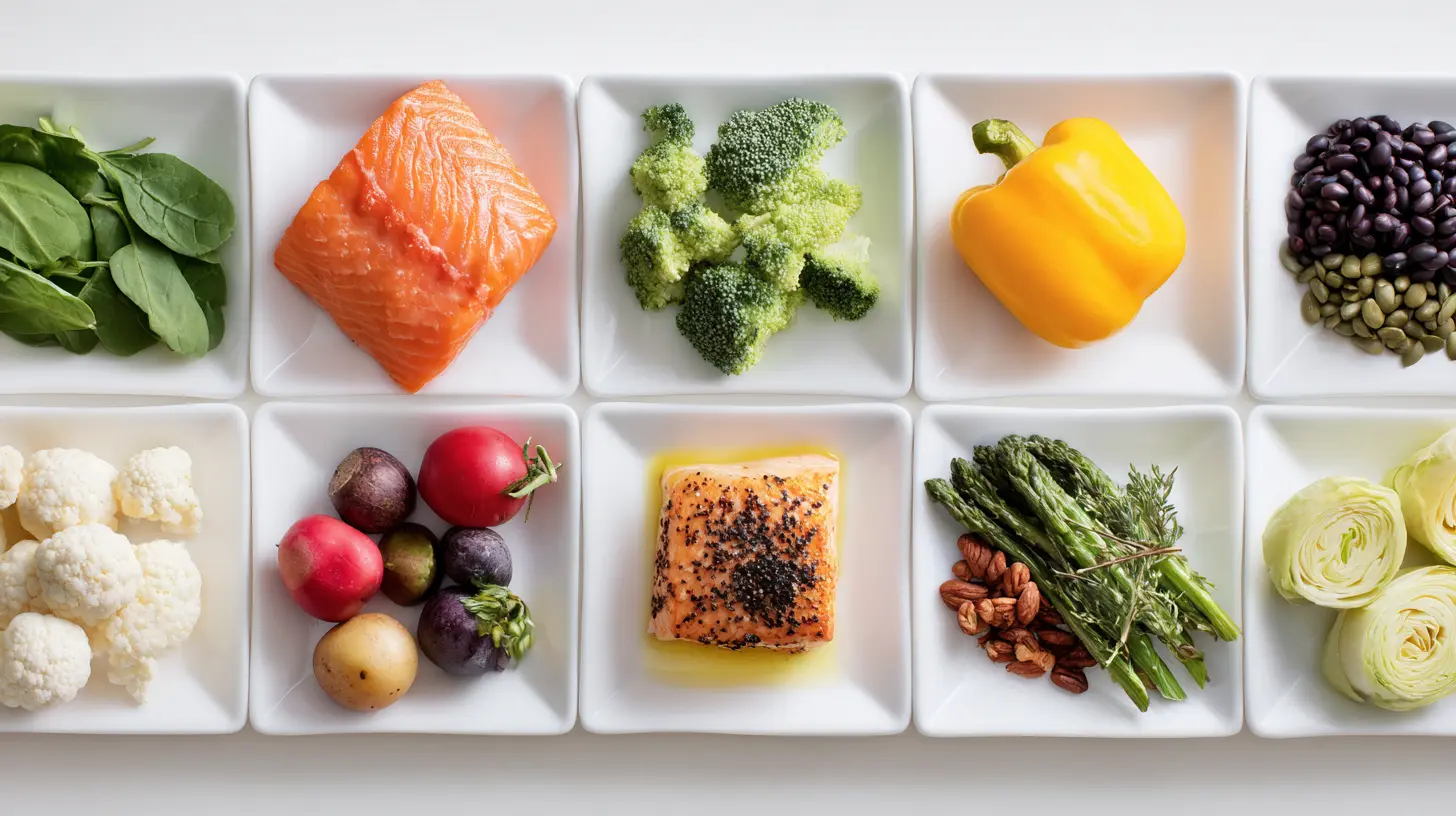
Real-World Scenarios and How to Handle Them
Restaurants
Restaurant portions are often two to three times a standard serving. Visual cues that help:- Use your palm to estimate protein and your fist for starches.
- Ask for a to-go container when the food arrives and box half immediately.
- Order an appetizer as your entree.
- Choose dishes where vegetables dominate the visual field.
The trade-off is social. Some people find boxing half the meal awkward, especially in business settings. If that applies to you, consider ordering a starter plus a side rather than an entree.
Buffets and Potlucks
These environments defeat most visual cues because plate size is fixed and food is unlimited. The most effective strategy is a single pass with a small plate, using the plate method, followed by a deliberate pause of five to ten minutes before deciding whether to return. The pause matters because satiety signals lag behind eating.Snacking
Snacking is where unit bias does the most damage. A bag of chips is a unit. A bowl is a unit. The bowl is the better unit because it is finite and visible. Pour a portion into a bowl, close the bag, and put the bag away. The extra step of retrieving more creates a natural friction point.Meal Prep
Pre-portioning meals into containers is the single most effective visual cue system for people who eat at a desk or on the go. The container defines the portion before hunger and mood enter the picture. The downside is upfront time and reduced flexibility. If you dislike eating the same meal repeatedly, pre-portion components separately rather than complete meals.Common Mistakes and Misconceptions
Mistake 1: Assuming Small Plates Always Work
Small plates reduce portions for most people, but not everyone. Some individuals respond by taking second helpings, which negates the effect. If you find yourself returning to the kitchen, the plate size is not your problem. The meal composition likely is.Mistake 2: Ignoring Liquid Calories
Visual cues are usually applied to food and forgotten for drinks. A tall glass of juice, a large latte, or a mixed cocktail can carry 200 to 500 calories with almost no satiety. Use smaller glasses for caloric beverages and larger glasses for water.Mistake 3: Confusing Portion Size With Serving Size
A serving size is a standardized reference on a label. A portion size is what you actually eat. They are not the same thing, and treating the label as a prescription rather than a reference leads to unnecessary rigidity.Mistake 4: Over-Relying on a Single Cue
Hand estimates drift. Plate methods fail at buffets. Pre-portioned containers do not help at restaurants. A robust system uses two or three cues that cover different contexts.Mistake 5: Measuring Forever
Visual cues exist to reduce reliance on measuring. If you find yourself weighing every almond six months in, the system has become a burden rather than a support. Periodic recalibration, perhaps one week every few months, is usually enough.
What the Evidence Suggests and Where It Is Uncertain
Research on plate size, unit bias, and the Delboeuf illusion is reasonably consistent in laboratory settings, but effects in free-living conditions are smaller and more variable. This is an important nuance. A cue that produces a 20 percent reduction in a controlled study may produce a 5 percent reduction in your kitchen, where habits, emotions, and social context all compete.This does not mean visual cues are useless. It means they work best as one component of a broader structure that includes meal timing, food environment design, sleep, and stress management. Expecting a smaller plate to solve a chaotic eating pattern is unrealistic.
Practical Recommendations
1. Use a 9-inch plate for most meals and a smaller bowl for calorie-dense foods.2. Apply the plate method as your default ratio: half vegetables, one quarter protein, one quarter starch.
3. Pre-portion snacks into bowls rather than eating from packages.
4. Use measuring spoons for oils, nut butters, and dressings.
5. Keep hand references as a backup for restaurants and travel.
6. Recalibrate with a scale periodically rather than daily.
7. Adjust based on hunger, energy, and goals, not on rigid rules.
Final Thoughts
Visual cues are not a diet. They are a feedback system that compensates for predictable errors in human perception. They work because they externalize a judgment your brain makes poorly, and they fail when they are treated as magic rather than as tools with specific strengths and limits. Build a small set of cues that fit your actual life, test them honestly, and adjust. The goal is not a perfect plate. The goal is a system you can run without thinking, most days, for years.
all images in this post were generated using AI tools
Category:
Portion ControlAuthor:

Sophia Wyatt